
The Critical Missing Piece To Your Successful New Year's Resolutions
When you think about your New Year’s resolutions – they probably feel very personal.
You’re probably telling yourself that you need do it all by yourself. You have the willpower and the ability to stick to it to make your goals happen.
You don’t need anyone’s help.
I always used to tell myself the same thing.

(This is the second part of a four part series on Why Your New Year’s Resolutions Won’t Stick. If you haven’t read part one. Stop and check it out here before continuing.)
When you think about your New Year’s resolutions – they probably feel very personal.
You’re probably telling yourself that you need do it all by yourself. You have the willpower and the ability to stick to it to make your goals happen.
You don’t need anyone’s help.
It might almost feel like weakness to need someone else to help you with your goals.
I always used to tell myself the same thing.
That I didn’t need anyone’s help. That I was smart enough and capable enough and that I shouldn’t ask for help. That I shouldn’t have to ask for help.
That I was weak or a failure if I needed someone else to help me.
That’s when I was stuck in the frustrating cycle of failing on most of my New Year’s resolutions before the end of January and wondering why I wasn’t achieving my goals.
Then I started to dig into the science – and made a simple but profound shift that flipped the way I think about goal setting on its head.
It doesn’t have to be that hard. And you don’t have to do it alone.
Along with power of accountability, I discovered that “going it alone” is often the toughest approach.
In fact, many of the expert guests I’ve had on Science of Success agree that the people you surround yourself with have a huge impact on whether or not you achieve your goals.
Surround Yourself with the Right People
You’ve heard “you are the average of the five people you spend the most time with.”
But what does that really mean?
It means you need to surround yourself with the right kind of people to become the person you want to be.
You need to have a community of people who support you and help hold you accountable to your goals.
In my own struggle with this, I interviewed Keith Ferrazzi, relationship expert and best-selling author of one of my all-time favorite books Never Eat Alone.
He shared two key ideas with me.
The first is that we have to stop thinking about the dirty word “networking” and start thinking about real relationship building.
The second big lesson?
Admit that rugged individualism isn’t reality.
Ferrazzi says that the “greatest things in our lives are only going to happen through co-creation.”
What does that mean for your New Year’s resolutions?
What if you had a group of people committed to helping you achieve your goals and holding you accountable?
Imagine the power of a group of friends that would be excited for you when you finally hit that goal and would be there with you when things get tough.
Ferrazzi says releasing our attachment to “I have to do this all by myself” lets us make space for co-elevation by working with others to help each other.
He says “that’s the next generation of real networking.”
Scott Gerber, CEO of The Community Company and founder of Young Entrepreneur's Council, says, “There is no ‘Five Steps to Success’ of relationship building,” but you have to focus on genuinely building long lasting relationships with the kind of people you want to become.
Gerber says you should be asking yourself these questions as you prepare to develop the right network to achieve your goals:
Who do you want to surround yourself with?
How do you want to live your life?
What kind of service and value do you want to bring to a community of peers?
What community do you want to create for yourself and around yourself?
These are some of the questions that helped me make the shift towards realizing I couldn’t do it all myself.
Surrounding yourself with the right people is the second big key to achieving your goals.
Use Behavioral Science to Make Your Goals Effortless
The key is realizing that once you’ve surrounded yourself with the right people – your goals start to happen naturally – without the tiresome effort and energy of trying to push yourself and use willpower to make your New Year’s resolutions stick.
Dr. Sean Young, Executive Director of the University of California Institute for Prediction Technology and professor of family medicine at UCLA, says, “We're taught to become someone else or put the blame on ourselves or others if we don't follow through.”
“If you want to get yourself to stick with doing something, it doesn't start from the mind, it doesn't start from you telling yourself, willing yourself, ‘I want to do this.’ It actually starts from behavior. It starts from changing your behavior. Then your mind will follow.”
Dr. Young identifies community as one of the most important tools for changing your behavior.
“Community,” he says, “is the idea that [it’s] social support and competition and other people that really gets us to stick with things.”
Reflecting on his own successes and failures, this is what Scott Gerber said was missing in the early days of his career.
In a very telling moment, he shared with me that back in 2010, his first business had failed miserably and almost bankrupted him.
“I had no one around me of real value, and I don't mean value in the sense of money or connections. I mean people that could’ve helped me in the rough times.”
After hitting that low, he went on to found Young Entrepreneur's Council and define his own brand of authenticity-forward success.
“It wasn't to create a sphere of influence around young entrepreneurs,” he says. “It was because I genuinely wanted to have real conversations with people that had similar experiences to me.”
Scott Gerber says what ultimately needed was to get a group of people and “mastermind our way to find mutual success.”
Scott Gerber realized that he could not be a team of one or a success powerhouse on his own, he realized that bringing a community around him was the missing ingredient to achieving his goals.
You can make the same shift in 2019 to tackle your New Year’s resolutions.
In the next parts of our Elevate 2019: Effortlessly Achieve Your Goals Without Stress & Overwhelm series we share the exact strategies you can use to make this shift for yourself and how you can create the kind of accountability and community you need to crush your goals starting right now.
This post is sent exclusively to our email subscribers, so if you found this article and you’re not on our email list, be sure to sign up here to get the next part of the series.

Niceness: The Deceptive Vice and Strategies for a Healthy Self-Interest
Do you struggle with people-pleasing and being afraid to say ‘no’ to people?
A lot of the behaviors that we think are nice often come from fear, obligation, or guilt and you don’t want this approval-seeking to dominate your actions and behaviors.

Do you struggle with people-pleasing and being afraid to say ‘no’ to people?
A lot of the behaviors that we think are nice often come from fear, obligation, or guilt and you don’t want this approval-seeking to dominate your actions and behaviors.
Unfortunately, people-pleasing behavior tends to influence a majority of people in our society. This seems to be a result of “Nice Conditioning”, a term used by Dr. Aziz Gazipura to denote the pervasive thought patterns which are instilled into us at a young age by those who raise us. Dr. Gazipura is a clinical psychologist responsible for the Center For Social Confidence, founder of Confidence University, and author of ‘Not Nice’.
He discusses how we’re told to step outside of ourselves and “Do the right thing”, which causes us to develop a systematically non-intuitive method of behavior. Little did they know (the people who raised us) that self-sacrifice can lead to harmful symptoms and an ineffective approach to decision-making.
The path to clearing this fog which obscures our desires is an inward-path that will empower us to be ourselves unapologetically. This path flies in the face of what most in our society deem “acceptable behavior”, but this can be rectified with a deeper understanding of niceness, it’s roots, and superior alternatives.
Niceness: What it Is and Isn’t
Dr. Gazipura finds it useful to differentiate between being ‘nice’ and ‘kind’. Being nice is rooted in fear, needing to ensure everything and everyone is okay, and avoiding conflict. He believes this “Safety-Mode” is so pervasive it acts as an adopted personality; one where you constantly look for possible dangers and plan to avoid them. This creates unrealistic, dramatic scenarios where everything is a crisis.
Kindness, on the other hand, is generosity rooted in choice. It’s understanding you have the option of doing something for yourself or someone else, then choosing them because it’s more desirable to you. This choice requires a certain degree of self-awareness (where you’re able to genuinely ask yourself what you want to do) and conscious strength (where you’re able to do what you want and tolerate any disapproval).
“Most people don’t even realize that it’s a very important question. They either think that it’s selfish, or it feels bad or unacceptable to even ask… Just because you ask: ‘What do I want?’, doesn’t mean you’re going to run out and go force the world to give it you immediately. But it’s part of connecting with yourself.” – Dr. Aziz Gazipura
One of the most obvious objections to doing what you want is that it will be perceived as selfish, bad, and wrong. While Dr. Gazipura agrees that some degree of approval-seeking is normal and necessary, he advocates finding an amount of niceness that doesn’t dominate; an amount where you’re capable of asking the most valuable question: “What do I want to do?” This question creates internal awareness and connection.
The Spectrum of Selfishness: From Self-Absorbed to Self-Sacrifice
“’I’ve never done a thing I wanted in all my life.’ Well, you may have a success in life, but then just think of it, what kind of life was it, what good is it? You’ve never done a thing you wanted in all your life.” – Joseph Campbell on the final line in Sinclair Lewis’ ‘Babbitt’
Contrary to popular belief, selfishness is not binary nor objective; it’s just a subjective label placed on to actions. Beyond being subjective, there is also a spectrum of selfishness—a spectrum which implies two extremes and a healthy balance in the middle. Those two extremes are: Self-absorption and self-sacrifice; leaving a healthy self-interest right in the middle. But what does a healthy self-interest look like?
Let’s look at the extremes first. Self-absorption keeps you from caring about what other people want, which prevents you from forming relationships with anyone. Self-sacrifice forces you into a life of fear-based niceness, which is known to cause physical health problems (like stomach problems, chronic pain, and tension myositis syndrome) and mental health problems (like depression and a general dissatisfaction with life).
A healthy self-interest requires you to figure out what’s right for you in the moment, not what’s ‘right’ by society’s standards. You must clear the fog of Nice Conditioning. Here are some changes that can help you clear the fog and return to yourself:
Clear the negativity and change the message to: “What I want is inherently GOOD.”
Realize that being in touch with yourself is better for you and everyone else. Not knowing what you want bothers others and gives them nothing to work with.
Reduce your time spent externally-focused (e.g. watching TV, being on social media) which clouds your inner desires with external suggestions.
Continually ask yourself, “What do I want in this moment?” This will build over time.
Retraining Niceness into Authenticity
“Discomfort Tolerance (your ability to go into something uncomfortable and do it) is transferrable.” – Dr. Aziz Gazipura
One of the most powerful techniques to overcome Nice Conditioning is learning how to say ‘No’ appropriately. To recall the previous objection of selfishness, it is important to know that saying ‘No’ can be selfish; but at times, it isn’t. Saying ‘No’ can be difficult and even scary for some people, so let’s discuss two of the incorrect assumptions that make doing it difficult:
1. The dramatic fantasy you imagine will happen once you’ve said no doesn’t actually happen.
2. And if there is a negative response, you can handle it; but it might be uncomfortable.
Dr. Gazipura suggests a strategy that you challenge yourself to say ‘No’ a certain number of times a week, then increase this number over time and you’ll see dramatic results very quickly. Start by asking yourself, “What do I want?”, moment-to-moment. Because saying ‘Yes’ can be an unconscious behavior, asking yourself this question requires awareness, reminders, and practice.
“Just like a muscle, your capacity to say no grows.” – Dr. Aziz Gazipura
How to Actually Say ‘No’: From Theory to Practice
“Think of it like an instrument or any other skill: Just start playing it and you’ll get there.” – Dr. Aziz Gazipura
Dr. Gazipura offers some advice on how to refine your skills of saying ‘No’:
“The world is a friendly place” – Use this as reassurance to approach things as if they’ll help you, not harm you.
Give yourself total permission to say ‘No’ – Saying ‘No’ is healthy and not bad. Don’t be apologetic or self-effacing and avoid elaborate explanations.
Be willing to ‘Sit in the no’ – Don’t decline one thing, then immediately over-commit to another. Accept that it will be uncomfortable.
Saying ‘No’ won’t make people hate you – In fact, it will probably make them want you even more!
Warm-up with ‘Social Fitness’ – Approach strangers with friendly greetings (or ask for a recommendation). You can do whatever you want, and it doesn’t matter; you’ll be alright.
When talking about people who experience social anxiety, Dr. Gazipura shares his wish for them to “Get on the other side of that and feel what it’s like to be socially free, to be liberated, then they can just be who they are and really enjoy that—and have fun!”
How to Ask Boldly
“So much of the time people approach fear as if it’s this brick wall, but really it’s like a thin curtain and you can literally walk right through it. The only thing stopping us is the physical discomfort in our nervous system.” – Dr. Aziz Gazipura
Beyond approaching strangers and engaging in harmless social encounters, there’s a time where we need to be bold when asking for what we want. Sometimes this need arises with our boss, our close friends, or our parents (or the very people who are responsible for our intense niceness-triggers). Dr. Gazipura views these intense triggers as ‘heavy weights’, while the harmless encounters with strangers are the ‘light weights’ we use to build up strength.
He also recommends that we recognize that niceness isn’t serving us, and it isn’t who we are. Then he encourages us to take risks and face discomfort. And the final step is to stop being afraid of ourselves. It’s necessary that we ask ourselves what we want, then ask for it!
A Self-Empowering Assignment
“It’s like any sort of training, you want to start where you can and just keep leaning into that edge.” – Dr. Aziz Gazipura
Dr. Aziz Gazipura ends with some actionable steps towards self-awareness, inner-strength, and putting an end to excessive niceness. You must begin by making the fundamental decision that you don’t want to be as nice anymore (and clarify why it is no longer serving you). Be in an environment that supports you. Pick one action that is easiest or most beneficial to you (like saying ‘No’). Then set a specific, small goal with that action (like saying ‘No’ twice a week).
If you truly want to implement some of the lessons here and learn to stop being nice and unleash your authentic self, check out Dr. Aziz’s Confidence University HERE!

Here’s Why Your New Year’s Resolutions Won’t Stick
“New year, new you.” If you’ve heard it once, you’ve heard it a hundred times.
I know I’ve personally had the experience of getting excited, setting a ton of awesome New Year’s resolutions and then slowly dropping the ball on each one as the year went on.
Honestly - most of them didn’t even make it past January. Then, the next year… rinse and repeat.
That was before I completely transformed the way I think about goal setting and creating results. I’ve seen the other side and I know that you can see the same change for yourself.

“New year, new you.” If you’ve heard it once, you’ve heard it a hundred times.
I know I’ve personally had the experience of getting excited, setting a ton of awesome New Year’s resolutions and then slowly dropping the ball on each one as the year went on.
Honestly - most of them didn’t even make it past January. Then, the next year… rinse and repeat.
That was before I completely transformed the way I think about goal setting and creating results. I’ve seen the other side and I know that you can see the same change for yourself.
It starts with throwing out all the junk that people have told you about setting goals and creating results – and all the phony BS out there about New Year’s resolutions.
I’ve spoken to dozens of experts this year – and one of the common threads they’ve shared is that it’s really hard to make big changes in your life…IF you go about it the wrong way!
That’s why so many people struggle with their big goals and dreams – because they are fighting against human nature and the way your brain works.
So why fight upstream? Why try and fight an uphill battle against human nature?
There is an easier way to create epic breakthroughs and transformations in your life. One that is aligned with brain science and makes it so that big changes happen naturally and effortlessly instead of through toil, blood, sweat, and tears.
Before we dig into the one big shift you can make that will allow you to create big results in your life in 2019, let’s look at the two big reasons WHY goals and New Year’s resolutions are doomed to fail in the first place.
The Major Social Problem of Our Time
There are two big reasons why New Year’s resolutions typically fail.
The first is because our goals often exist in a total accountability vacuum.
As business psychology expert and renegade therapist Peter Shallard shared with me in a recent interview: “The root cause of the major social pathology of our time is that most people have absolutely zero accountability in their lives.”
The single biggest social problem of our time is that people no longer have any kind of accountability in their lives.
Shallard goes on to say “the human brain did not evolve to optimally perform in that vacuum of social accountability.”
When you set a goal without the right accountability structure you’re setting yourself up for failure. You’re fighting against brain science.
We used to live in tribal and hunter gatherer societies with constant social feedback, reinforcement, and accountability for what we did. If you didn’t live up to your stated commitments, you had to face your failure in front of all your friends and loved ones!
Or, in some cases you were kicked out of the tribe altogether. Wouldn’t these consequences get your butt in gear?
Sadly, that accountability simply doesn’t exist in today’s world.
Here’s a 5 second test you can use to get a sense of how much accountability you have in your life right now.
Shallard recommends asking yourself a simple question “Does anyone on earth really know if you spent the last week in the zone absolutely crushing it, or if you were just clocking in and out without accomplishing anything?”
He and his team conducted a research poll on a large sample of highly successful entrepreneurs. The results were shocking.
The results revealed that even people with self-described great friends, great marriages, and amazing social networks answered no. They simply had NO accountability in their lives.
Shallard says the increasingly digital, private, on-screen nature of our lives means “no one knows whether or not you crushed it last week, or whether or not you just clocked in and out and wasted time.”
What does that mean for you?
For starters – it explains why it’s so darn hard to keep those New Year’s resolutions!
Without the right kind of accountability you are fighting thousands of years of human evolution and making it much, much harder to achieve your goals.
You were set up to fail and you didn’t even know it.
The good news is – there are several evidence-based strategies for creating epic levels of accountability in your life. I will share them all with you in an upcoming post of this series – Elevate 2019: Effortlessly Achieve Your Goals Without Stress & Overwhelm.
The Other BIG Reason That New Year's Resolutions Fail
There’s another MAJOR reason that your New Year’s resolutions typically fail.
This reason is just as, if not MORE important than accountability. (Hint: It’s something you probably know is true for you and have been thinking about it in the back of your mind for a while..)
Do you think you know what it is? Let’s hear it! Email me at matt@successpodcast.com and let’s start the conversation!
Luckily, either way I will tell you all about in our next post in the Elevate 2019: Effortlessly Achieve Your Goals Without Stress & Overwhelm series next week.
Our next post is exclusively be for our email subscribers, so if you found this article and you’re not on our email list, be sure to sign up here.
Talk to you soon.

Here’s How To Practice Sustainable Time Management And Stretch Out Time
Stretching your best moments so that they last longer sounds like an impossible task. So does ruthlessly eradicating the things that clutter your life and mind.
But that’s exactly what Laura Vanderkam wants to empower you to do.

Stretching your best moments so that they last longer sounds like an impossible task. So does ruthlessly eradicating the things that clutter your life and mind.
But that’s exactly what Laura Vanderkam wants to empower you to do.
Vanderkam isn’t trying to feed you some motivation about how you have to work hard, long hours and sacrifice your personal life for success. She’s the author of several time management and productivity books whose work has appeared in publications including the New York Times, The Wall Street Journal, Fast Company, and Fortune, to name a few. Her TED talk on how to gain control of your free time has over five million views and she co-hosts the podcast Best Of Both Worlds.
When I told her our listeners want to get more time, she wasn’t surprised. Her take: “How we spend our hours has a big effect on how we live our lives, and anything we're going to accomplish is going to require putting time against it.”
When you think about your goals for the day, the week, the month, next year, or even your goals for life, you may experience an urgency to master time management so you can make it all happen.
But what is time management? I shared with Vanderkam that I don’t even like the phrase because of all the baggage associated with it. Her response? My disdain is totally understandable.
“What comes to mind [for many],” she says, “is trying to cram 30 more things into your day, which is really not the point. It's not about scheduling every single minute of your life or getting 10 zillion more chores done and all your e-mails answered by 2 p.m., or whatever it is.”
Sometimes doing more really does feel better, but it can also lead to burnout.
Vanderkam says healthy, sustainable time management is “about spending your time and your energy on the things that are most important to you—on the things that will help you achieve your goals in life.”
What Good Time Management has to do with Savoring
“When you approach it from that perspective,” she says, “you have a very different mindset about time. You stop trying to cram more, and in many cases, you start getting rid of things because you realize it would be more beneficial to have open space so you can think about things, or deal with situations as they come up, or linger in good conversations as they're happening”
She also challenges the idea that having a packed calendar is a badge of honor.
“People often like to talk about how busy they are and how much they have going on, which is a nice way to talk about how important we are. If the demand for our time is high, then we must be very important—that's why we're so busy.”
Of course, some of us associate a lack of scheduled activity with slothfulness. We don’t want to Netflix (or chill) all day. We want to live our lives intentionally and get things done.
Interestingly, Vanderkam’s research indicates that some very successful people have schedules with a surprising amount of open space.
“These are people who clearly could fill every minute if they chose to,” she says. “Certainly the demand for their time is there, but they choose not to. They choose to recognize that open space does invite opportunity into their lives because they have time to think—they have time to linger in good things and explore them and create new opportunities.”
She’s also studied the differences between people who feel relaxed about time—people, she says, who feel time is abundant—and those who are equally busy but feel time is more scarce and “getting away from them”...people who are starved for time.
One of her most illuminating findings:
“If you want to actually feel like you have more time, you need to create more memories and have this mindset toward having adventures in your life, even on normal days.”
Study participants who felt that time was more abundant were “doing things like going to salsa dancing lessons at night, or going to a big band concert, or going to a movie on a Monday night.”
More free time and spontaneity—isn’t that the opposite of time management?
Vanderkam acknowledges that for those of us who feel starved for time, adding in a dance class or buying tickets to see a show after a long day at the office might sound completely counterintuitive.
“[It] might seem a bit of a paradox, because committing to do stuff like that might make us feel we have less time. ‘I have something in my evening, therefore I have less time.’ But it turns out not to be the case. It turns out that by putting interesting things into our time, we make time memorable.”
She explains that when we make time memorable, we remember it. The same 24 hours we have in each and every day seem more abundant because, as she points out, when we invest in making memories, “we don't have this sense that time is just slipping from one side of the hourglass to the other.”
Make like a detective and see where your time is going.
If you want to spend your time better (and feel you have more of it), Vanderkam says the first step is trying to figure out where your time is actually going.
“This is another of those paradoxes,” she acknowledges. “I’m not saying, ‘Oh, people should feel relaxed and off the clock.’”
She wants you to know exactly where your time goes. “We have to pay attention to the clock first—before we can start feeling off the clock,” she says.
“One of the reasons people feel so overwhelmed and busy is they actually don't know where all their time is going.”
Vanderkam isn’t picky about what method you use. She says she keeps a spreadsheet. You could also consider using a time tracking app like Toggl if you prefer something more automated. Whatever you choose, aim to categorize your activity as honestly as possible.
Vanderkam (who obviously takes time tracking pretty seriously given that it’s the topic of her research!) says time tracking takes her about three minutes a day, which is approximately the same amount of time she spends brushing her teeth—“so not a huge commitment.”
Once you’ve tracked your time for a week, look at it and add it up. See how much time you are spending
Working
In the car
Sleeping
Watching TV
Exercising
Volunteering
With friends
With family
And on any other important or regular activities.
Then, Vanderkam says, it’s time to ask yourself the important questions: “Does this seem right? How do I feel about this?” and “Am I spending enough time on the things that are important to me? Or maybe I'm skimping in this area, or I'm spending too much time in this area?”
These are questions most of us ask ourselves on a daily basis, but without time tracking, they’re nebulous and can become the source of anxiety and stress.

Time Tracking = Freedom
Vanderkam suggests that time tracking affords people freedom from the stories we tell ourselves about where our time goes.
“People have all kinds of stories they tell themselves about where the time goes,” she says, “which may not be true. We have a tendency to view our weeks where we're working in the longest hours as typical.
She says it’s not uncommon for people to think “Oh, I was at the office until 9:00 p.m. on Wednesday. Therefore, I'm working always 12-hour days,” and conclude that they work 70-hour weeks when, in fact, “every other day, you weren't there until 9:00 p.m. and there were breaks during the day, Friday you came in late and left quite early, and those weekend e-mail checks only added up to an hour, even though it felt more than that.”
In short, the reality check that comes from tracking our time can help us move on from a victim mentality (Never enough time!) to embrace a more fulfilling and memorable way of being.
Vanderkam shares that “looking at our time logs, we can get a better sense that’s not in this story of overwhelm, this narrative of catastrophe.”
Stepping back and looking at the numbers, we see can see “Well, actually I am spending a little bit more time in the car than I'd like. Are there ways I could scale that down? Or I'm doing more errands than I'd like. Are there ways we could start ordering stuff online?”
Or, “I seem to be at work longer than I wish to be because I get really distracted in the middle of the afternoon [and] go down some internet rabbit hole. If I maybe figured out how to manage my energy and take real breaks, then I could actually focus for the afternoon [and] get out at a reasonable hour.”
In summary, she says there are lots of things we can discover.
The Magical Ability to Stretch Out Time
So maybe it’s not magic, but the powers of awareness we gain when we commit to time tracking can work in tandem with scientifically proven means of savoring good experiences that—in their way—allow our brains to stretch out time.
Vanderkam says, “In psychology, it's fascinating to see how people can take tough moments and be resilient in them, but it's also an equally interesting thing to see how people can take good moments and make them feel deeper and last longer.”
Some techniques you can use?
Create anticipation. It’s not just that good things that come to those who wait.
Vanderkam says that when we know something good is coming up (like a vacation, a concert, or a great meal), “the anticipation can stretch the pleasure for quite a bit of time.” Essentially, you’re investing in your enjoyment of the experience and dedicating extra time to it by planning ahead and thinking about what’s to come.
Be fully present. When you’re in a good moment, don’t let your awareness wander off anywhere else. “Just notice details and think about how you might describe this to someone afterwards,” Vanderkam suggests. “If you have somebody there with you,” whether it’s a child, a date, or a travel companion, “talk about how much you're enjoying yourselves.”
Vanderkam says “actually calling that out to each other is a good way to remind yourself that you are enjoying yourselves, and to focus on that.”
Plan your weekends. Vanderkam says when helping people time track, sometimes they just stop on the weekends. “Did life stop then? It did not continue? What happened?” she asks.
She says “being intentional about our weekends is a great way to maximize our fun, leisurely, enjoyable time and make sure we're spending that in ways that are rejuvenating to ourselves as opposed to just spending the whole weekend on chores and errands, or else attempting to do nothing [and having that nothing turn into] stuff that we didn't really want to do.”
Don’t invite your phone to the party. Some of Vanderkam’s research involves reporting on time perception scores—a metric that assigns a higher numeric value to feeling satisfied with time or experiencing an abundance of time rather than a lack of it.
One of her most interesting findings: “People who had the highest time perception scores checked their phones about half as frequently as the people who had the lowest time perception scores.”
Do involve your senses. Our brains don’t rely on the white space on our calendars to determine how much time we have. Instead, they rely on how many memory units we’ve formed.
What’s a memory unit? Vanderkam says “If you think about the first day of a vacation, it tends to seem very long if you're traveling somewhere exotic because your brain has no idea what it needs to know, so it's remembering everything that you encounter.”
Of course, all that new input can make the day seem epically long (and worth retelling for years to come). The question Vanderkam asks is “Well, can you do that in normal life too...can you have new experiences, novel experiences, can you plan in things that will be memorable?”
If yes, she says, you’ll remember those days. So, sniff the soap in your hotel room, listen to your favorite song on repeat (and sing along), take yourself somewhere new during a lunch break, schedule a meeting in the park, and give your brain something to remember your time by.
Think less about managing and more about creating, and you’ll be well on your way to stretching time.
If you enjoyed this…
I study strategies for evidence-based growth. Sign up above to get a TON of specific books, resources, and recommendations on being happy and successful.

Make It Stick: Innovative and Effective Techniques for Learning
Are you frustrated with being unable to recall some of the incredible material you learn from books, articles, and podcasts?
Fortunately, you can use some of these effective learning techniques from experts to make sure you actually remember all these learnings and can put them into action!

Are you frustrated with being unable to recall some of the incredible material you learn from books, articles, and podcasts?
Fortunately, you can use some of these effective learning techniques from experts to make sure you actually remember all these learnings and can put them into action!
Peter C. Brown, the author of Make it Stick: The Science of Successful Learning, wrote his books with experts of Psychology Henry L. Roediger III and Mark A. McDaniel. Make it Stick draws on recent scientific discoveries to clarify our misunderstanding of how to learn effectively. The good news is, their recommendations will make learning less repetitive and more effective!
The Three Biggest Ideas from Make it Stick
Peter broke down the three biggest ideas from his book:
Making the learning easy and clear does NOT help it stick.
The trick to making it stick is to challenge your brain to wrestle with the material.
Our intuition will lead us astray towards repetition and the ineffective exercise of short-term memory.
The common notion is that we must get information INTO the brain, but the real benefit is when you get information OUT of the brain: That is done by what he refers to as ‘wrestling’ with the material. This includes activities like:
Retrieving the material from memory
Connecting the new material with preexisting knowledge
Trying to explain it to someone else
“One of the great things of being a human being is: The brain is wired to wrestle with this stuff once you’ve engaged it in the problem.” – Peter C. Brown on The Science of Success
Mixed (Not Mass) Training
Peter illustrates these ineffective methods through analogy: To practice a putt 20 times in succession focuses on short-term memory and does not improve your ability to recall the training in the future: This is called ‘Mass Practice’, where you perform a simple task repetitively. Alternatively, he suggests a method of learning that he calls ‘Mixed Training’. This is a method where you dedicate your focus of working-memory to one task, but frequently switch between a few tasks.
Sticking to the previous analogy, with Mixed Training you would alternate between various types of shots and putts under different conditions, then force yourself to recall the necessary putt in the middle of a series. Your brain creates different connections when it’s required to recall the information, these embed it deeper in your memory, similar to how your brain subconsciously contemplates information in your sleep. But this is not limited to mental training, it works the same with physical training as well!
Spaced Training, Mental Models, and the Hippocampus
“Letting your brain wrestle with it, coming back—that added effort of remembering—and then building on that remembering with another effort. It is a desirable difficulty—a spaced kind of practice.” – Peter C. Brown on The Science of Success
Besides Mixed Training, Spaced Training is another potent technique for learning. It consists of spacing out your study periods in gradually more distant intervals to help combat forgetfulness. Spaced Training can be illustrated by the Leitner System, where correctly answered flashcards are placed in boxes that are studied less frequently and incorrectly answered cards are returned to the first box to refresh your memory.
By understanding a little bit about how our brain’s hippocampus works, we can make more sense of how these methods of learning work so effectively. The hippocampus serves as the birthplace of memory, where it exists temporarily as a ‘memory trace’ unless our brain makes gaps between it and preexisting information. These gaps manifest through the connection of neurons, thoroughly embedding the knowledge into your brain. So, how do we promote the creation of these connections?
Wrestling with the material is a general representation of your desired strategy, but a specific strategy is working with pneumonic devices, such as a Memory Palace. These devices help create mental models to organize and further comprehend knowledge. A Memory Palace is a memory technique where you visualize a room and associate aspects of the room to the information you’re trying to recall. Then when you need to recall the information, you simply ‘walk’ through your Memory Palace until you approach the aspect associated with the desired piece of information and – boom! – there it is.
“Building these mental models—adding more knowledge to them, understanding how they relate—opens the world to other learning.” – Peter C. Brown on The Science of Success
Forgetting: Humans’ Universal Pastime
“Forgetting is the human condition. That’s why you’ve got to find a way to interrupt the forgetting. This idea of retrieving from memory—that’s a way to tie the knot, to keep that memory. Anything that you want to be able recall later, periodically, HAS to be recalled from memory.” – Peter C. Brown on The Science of Success
Unfortunately, forgetfulness is a necessary condition of the brain and it is here to stay. In 1885, Hermann Ebbinghaus, a German psychologist, pioneered the ‘Forgetting Curve’. This is a graph which represents the exponentially increasing difficulty of retrieving a memory as the time after exposure to the information increases. It illustrates how we lose roughly 70% of the information immediately, then the remaining 30% gradually. This graph was instrumental in the development of the Leitner System, eight decades later.
Peter recalls a story:
“I thought of—for some reason—a child putting cranberries on a thread and going to hang them on the tree, then discovering that they were falling off the other end of the thread—because there was no knot! If every cranberry is some kind of learning you want to hang on to—it’s like a string of pearls—you need a knot every one of them. You need to practice each of those periodically.” Peter C. Brown on The Science of Success
He then jokes that we’re all losing our cranberries eventually!
The Benefit Is Not in Leaving, It’s in Returning
Peter tells us about one of his favorite studies involving a simple shift in the training protocol for microsurgeons. The initial training involved watching a training video, then performing a relevant simulation, four times in one day. But in this study, half of the doctors participating went through the training over four weeks, with one training video and its respective simulation done on the same day. A month after completing this training, all the doctors were tested and those who spaced their training out performed far better than those who did all the training in one day.
Peter then refers to Dr. Carol Dweck and her theory of the growth mindset. He discusses how this theory has shown that your intellectual abilities aren’t fixed and limited by your genes. To a large degree, they can be increased by intentionally building mental models to form connections and increase the wiring in the brain. You don’t interpret the difficulty as failure or that you aren’t getting it, you carry on forward and alter your strategy slightly.
An Inspirational End and Some Homework
“If you interpret the difficulty as: I’m not getting it—I don’t have what it takes. That’s too bad! You could say: I’m not getting it YET!” - Peter C. Brown on The Science of Success
Peter recommends checking out his book, Make it Stick, because it offers all of the available research and it’s laid out with examples in a reader-friendly manner. He asks that you inquire of your own life where you’ve had challenges while learning with ragged and random strategies but ended up surprising yourself with your own success. Then he suggests the Science of Learning and ends with a recommendation of new tools to create flashcards and quizzes on your phone in order to memorize things.

Imposter Syndrome: The Hurdle That’s Preventing You From Being Your Boldest Self Every Day (and in Life’s Toughest Situations)
Harvard Business School students—many of us would identify them as a privileged elite who are bound for professional and financial success.
But according to research, 75 to 80 percent of them experience imposter syndrome.

Harvard Business School students—many of us would identify them as a privileged elite who are bound for professional and financial success.
But according to research, 75 to 80 percent of them experience imposter syndrome.
And according to Dr. Amy Cuddy, a social psychologist, author, and speaker who lectures on the psychology of leadership and influence at Harvard University (and gave the second-most viewed TED Talk of all time), impostor syndrome is preventing most of us from being our authentic best selves, too.
But first, what is an authentic best self?
When we spoke to Dr. Cuddy about how we can feel powerful in life’s toughest moments, she was quick to point out that “authentic best self” is a phrase that’s frequently used, but not well defined. Here’s the meaning she intends:
“Let me just take a moment to say by authentic, I don’t mean unfiltered, right? I mean, there are times where we need to be mindful of who we’re speaking with and be respectful in our interactions and you could still be authentic.”
“I’m talking about the person that you are in the best moments of your life. If you think back, over the last, say, two or three years, think about the very best moments. These moments would be times when you feel totally connected,” she says. “You feel on, you feel seen, you feel heard, and you feel that you’re seen in hearing them and you feel happy and relieved. That’s your authentic best self.”
Dr. Cuddy concludes that impostor syndrome is keeping many of us from tapping into that state and exuding our best qualities and points out that we’re too distracted by fear in many interactions to tap into our authentic best selves.
This brings us to the definition of impostor syndrome, which the Harvard Business Review identifies as “a collection of feelings of inadequacy that persist despite evident success.”
Sounds like the fear Dr. Cuddy is referring to, right?
I asked her how we can bring that authentic best–self presence into situations where we’re interacting with other people, the stakes are high, and we feel like we’re being judged. What I wanted to know: “How do we bring presence to those types of situations and what prevents us from being present in those high-stakes environments?”
Her response:
“Well, I think the key is that we feel powerless in these moments. Feeling that you’re being judged and being very focused on the outcome as opposed to the process. Again yeah, feeling that the stakes are very high makes it really hard for us to even remember who we are well enough to be able to access that person and present that person.”
Imposter syndrome often involves a feeling of lying to others and ourselves and a fear of being caught in the act.
Dr. Cuddy says, “It's about feeling powerless, it's about feeling that you somehow accidentally got the job, or the award, or whatever it is and that you're going to be found out at any moment.”
She highlights that it’s an inability to stay present and authentic that contributes to this behavior—and the fear.
“When we're not present, it reveals itself to others, right? In some ways, not being present is the same as not bringing your authentic self to the situation. It looks like deception.”
When it comes to overt lying, there’s an asynchronicity between the words we use and our body language because we’re suppressing our true story and “telling another, different, false story.”
This involves suppressing our true story with words—which most adults are pretty good at—but also suppressing the emotions that go with the story.
Dr. Cuddy says “It's almost impossible for us to do that,” and goes on to share that “what happens is that we see these asynchronicities between the emotions that go with the words and the emotions that are leaking out through people's body language. When you're nervous and not authentic, the same kinds of things happen. People seem asynchronous. They seem off. Their words don't quite match what they're doing with their bodies, because you have too much to think about and not enough cognitive bandwidth to be telling the story and also matching your nonverbals to it. That's too much choreography.”
Of course all this comes into play when we’re experiencing imposter syndrome, which is a lot more common than you might think.
Dr. Cuddy says part of the imposter syndrome experience involves “pluralistic ignorance”—“we think that everyone else who has that job or goes to that fancy school is feeling great and confident and deserving. They're not.”
Dr. Cuddy’s advice to anyone whose experiences with imposter syndrome are putting them on edge:
“The first thing is to realize that you're not alone. Everyone is feeling imposter syndrome at some point in their lives. If you are in a situation with people who've really excelled and in a competitive situation, chances are a lot of people are feeling that way.”
Is Imposter Syndrome a Gendered Issue?
Interestingly (but perhaps not surprisingly), Dr. Cuddy shares that “when impostor syndrome was first studied in this 1970s by a woman named Pauline Clance, she originally thought that it was much, much more common among women than men. Then she learned pretty quickly that it wasn't. It was just that women were more comfortable telling her that they were feeling that way.”
Dr. Cuddy says, “This is one of the ways in which gender stereotypes I think really hurt men,” and goes on to say that “men are feeling like impostors. I think the burden on men—so this whole idea that it's a woman's problem—is not only bad for women. I think it's bad for women, because it's like another thing to heap on top of the pile of all of these things that women are afraid of. It's also a burden on men because men believe that men generally don't feel like impostors and [if] you do feel like an impostor, that's really going to make it even harder on you.”
Dr. Cuddy says some 85 percent of men have probably have felt like imposters.
Regardless of your gender, Dr. Cuddy says an important first step in addressing imposter syndrome is noticing when you feel it.
She says in some senses, it’s like a game of whack-a-mole: It just keeps popping up, especially in situations where you feel very public or exposed, for example, a winning an award or being recognized for something you did well in front of a group or crowd.
Of course, it can also rear its head during the first few weeks on a new job or working on a project that feels “out of your league” or “beyond your wildest dreams,” even if you have all the prerequisites and have done a great deal to earn the opportunity.
“Use your body to change your mind.”
Rather than trying to escape imposter syndrome with self-talk and mental acrobatics, Dr. Cuddy highlights the potential to change the mind using the body. She notes that we lose personal power for so many reasons, from unfair inequalities to illnesses to chronic unemployment, and associates certain physical movement and behavior with exercising—or, in a sense, practicing—healthy personal power.
These poses, movements, and awarenesses can loosen the clutches of imposter syndrome, especially when we know a high-risk interaction is on the horizon.
Before going into a stressful situation, she suggests preparing yourself by using the following:
Stretch. “Stretch out, make yourself as big as you feel comfortable doing, but in private, right? Not in front of other people. You want to do it in private because you don't want to...offend people, [and] you also don't want to feel that you’re being judged. Do that before you walk in.”
Practice expansive postures. “Carry yourself with a sense of pride, but not in a way that's domineering. You're not challenging somebody to a duel—you're trying to have an interaction where you connect with them, where they see you as confident, but they also see you as likable and trustworthy and engaged and as somebody who wants to be there, who doesn't feel that he or she is the most important person in the room, but is someone who's there to connect.”
“You're not going to man spread when you're sitting in a job interview, you're not going to stand like a superhero or in the victory pose when you're in a job interview, but you can do it in advance,” she says.
Gesture intentionally. Dr. Cuddy says, “Palms up for example, [shows] that you are comfortable being there.”
Breathe. “When you breathe deeply and expansively and really fill your lungs, you are triggering what's called the relaxation response,” says Dr. Cuddy. “That is a complex circuitry in your mind that's telling your body that you are not in a threatening situation. You are in a safe situation. You don't go into fight, flee, or faint mode. You feel comfortable.”
Be mindful. Feeling 100 percent the imposter in a given moment? Stay attentive to your body language. If you suddenly “close off,” crossing your arms, touching your neck, or slouching, be aware. “Try to figure out what happened,” says Dr. Cuddy, who goes on to ask “How can you get things on track again?”
“Notice the times when you start to slouch and make yourself small and see what you can do to correct that,” she says.
“Pay attention to other people's posture.” When you’re in any interaction, she says, “Remember that presence begets presence. When you're present, you are inviting others to be present. When you're present, you're saying ‘I am authentic. I am here. You can trust me.’ They respond in kind.”
If you enjoyed this…
I study strategies for evidence-based growth. Sign up below to get a TON of specific books, resources, and recommendations on being happy and successful.

The New Mindset For Evaluating Decision Making
We often have to make decisions when we have a limited amount of information to evaluate and little control over the factors affecting the outcome.
So what exactly is a good decision? Is that different than a good outcome?

Every decision you make, no matter how small, is going to have an outcome.
The problem is that we oftentimes don’t know what the outcome of a certain decision is going to be. If we did, we’d never make bad decisions. Unfortunately that’s just not the reality we live in.
We often have to make decisions when we have a limited amount of information to evaluate and little control over the factors affecting the outcome.
So what exactly is a good decision? Is that different than a good outcome?
We sat down with professional decision strategist and best-selling author of Thinking In Bets: Making Smart Decisions When You Don’t Have All The Facts, Annie Duke to examine this key question and more.
Annie has leveraged her expertise in the science of smart decision making throughout her life. Her expertise has served her well and for two decades she was one of the top poker players in the world. Her work led to her being granted the National Science Foundation Fellowship and she studied Cognitive Psychology at The University of Pennsylvania.
Annie demonstrates how loose the relationship is between outcome quality and decision quality, which is highlighted extremely well in poker…
I can play the best hand and I can actually play it very well. On the turn of a card, because I don’t have and control over the cards that come, I can lose. So I can make a really good decision and have a very poor outcome, or I can play a really bad hand. Actually play it pretty poorly, and because I get lucky with the cards that are still to come, I could win. So I can also make a really poor decision and have a really good outcome. - Annie Duke on The Science of Success.
When a football coach calls a play on the goal line he doesn’t know what play the other team is going to run, he doesn’t know that his quarterback’s calves are about to cramp up. All he can do is use the limited amount of information he has to make what appears to be the right decision.
The same applies in business. Let’s say an executive is thinking of joining the advisory board of a young startup. She’s already facing a full plate with her current projects, but the startup does have an interesting idea. All she can do is evaluate the opportunity with her knowledge of the market and make a decision. She may not know that an expert will be joining the team a week later and lead the company to a huge breakthrough.
The point is, we oftentimes have to make decisions with a limited amount of information and zero control over factors affecting the outcome. This loose relationship between decision quality and outcome quality can begin to create a lot of problems for us.
What you see people do when they are evaluating their outcomes out in the world is this thing called resulting. They are looking too deeply at other people’s results. Resulting is tying too tightly the quality and the outcome back to the quality of the decision. In other words, thinking that it’s a reasonable thing for you to be able to work backwards from whether the outcome was good or bad to whether the decision was good or bad. An example would be thinking that if I win a hand of poker, I must have played it well, or if I lose a hand I must have played it poorly. It’s not that black and white. - Annie Duke on The Science of Success
So how can we make smart decisions when we don’t have all the facts? What can we do to avoid resulting and experience more positive outcomes than we do negative outcomes?
Annie has spent her career testing, experimenting, and researching this question in extremely high pressure environments. Her work has led her to pinpointing three strategies that will help keep you in the black when it comes to the quality of your own outcomes.
Frame Your Decisions as Bets

When you begin to tie a certain decision to a certain outcome, stop and ask yourself, “Well would I want to bet on that?” - Annie Duke on The Science of Success
When we start to make these broad statements and begin to evaluate our decisions solely on the outcomes we need to slow down. By asking yourself mentally “Do you want to bet?” you take on the role usually played by a friend trying to make a quick buck who disagrees.
What this does mentally is it raises doubt and uncertainty in your mind. Which in this case, is a good thing!
It reminds us that this relationship between decision and outcome is not so simple and can be hard to evaluate. According to Annie, there are two types of uncertainty that are always present and worth evaluating. First, there is always an amount of luck that affects how things turn out. Second, there is information asymmetry or hidden information we may not be aware of.
Asking yourself “want to bet” sheds light on these ever present uncertainties.
So when I challenge you to “want to bet”, what it does is it reminds you that while you might have been so certain about the connection between the quality of the outcome and the quality of the decision, that there is, of course, uncertainty there from hidden information and luck. - Annie Duke on The Science of Success
Another benefit of asking this question is that it spurs you to try to start examining this uncertainty. You begin to ask yourself questions about your evaluation such as…
Why do I think this?
What research have I done?
What are the real probabilities?
What would someone challenging me to bet on this know that I don’t?
Asking these questions not only allows you to look at the situation more concretely but also to consider other perspectives might be. Which is critically important!
One of the best ways to be a good decision-maker is not just to imagine things from your perspective, but to also try to imagine things from other people’s perspectives… other people’s perspectives offer valuable insights that you might not have yourself. - Annie Duke on The Science of Success
Asking yourself “Want to bet?” causes you to be very, very information hungry. The idea is that we have to acknowledge the uncertainty that is in play between our decisions and their outcomes. Once the uncertainty has come to the forefront of your mind you begin to examine it and narrow down and reduce the uncertainty.
In order to do that, we have to start seeking additional information and consider other perspectives, which is always a good thing.
Get Others Involved In The Process
But make sure they’re the right people!
It can be hard for us to get our brains to begin working this way. Thinking in Bets, like any adjustment to your internal process, takes time and effort.
Annie recommends forming your own group or tribe to help you adjust and to further challenge your assessment of your decisions. By forming a group you are able to not only bring in more information from outside your own knowledge base but additional perspectives as well…
So we can use that to our advantage and we can get some people together and say “Listen. I’m going to watch your back and you’re going to watch my back.” But the key is that you want to form this group through this idea of we’re going to approach the world through thinking in bets. What that means is that we’re going to approach the world through the frame of trying to be accurate, versus trying to be right. - Annie Duke on The Science of Success
That last line warrants repeating. Approach the world through the frame of trying to be accurate, versus trying to be right.
Sadly, oftentimes when people get together in a group, they end up forming a tribe where everyone’s goal is to prove that they are better than everybody else in the group. The problem becomes compounded because what ends up happening is instead of de-biasing the individuals in the group the group causes people to become even more biased. If we’re all looking to be smart and right all the time we are just trying to have our prior beliefs affirmed.
This comes back to another important point around the importance of a growth mindset. We have to be able to adjust our long held beliefs and accept reality as it is. We may not always be right, but that’s a good thing. If we’re stuck in a fixed mindset and always trying to appear smart and appear to have all the answers we shut ourselves away from other opinions. Not one has all the answers and without other opinions we cannot expect to grow and learn.
It’s absolutely critical that your group share this mindset.
What we care about is not being right. What we care about is being accurate. So I’m agreeing that because my goal is accuracy, that I’m going to have to take some short-term pain sometimes. It means that sometimes I’m going to find out that something I believed is not actually accurate. Now, that’s okay, because my goal is accuracy. - Annie Duke on The Science of Success
It feels good to be right but that’s not where growth happens. In order to expand our horizons we need to be confronted with new information and points of view that may end up proving us wrong.
As Annie notes, this may be painful at first. However, in the end, being able to confront new truths we ultimately build up our knowledge base which will lead to us being right more often than we would have been prior.
So find yourself a group of people willing to commit to challenging one another in the right way. Committed to accuracy and helping one another find the truth based in nothing but facts and the sharing of perspectives, not pride and the desire to look smart.
Quarantine Yourself From Experience

The best way to ensure that you’re learning well from experience is to actually try to quarantine yourself from experience. - Annie Duke on The Science of Success
This may sound a bit strange but let’s explain.
When you have an outcome, good or bad, the quality of the outcome casts such a strong shadow over your ability to evaluate the decision quality it’s almost better to not have the outcome known at all.
We’re usually dealing with just a handful of outcomes, limited and biases data, and we’re trying to evaluate the decision making. We know the outcome quality and it casts a very big cognitive shadow and we want to try to get out from under that.
According to Annie, one somewhat uncomfortable exercise can help us get a sense of how good our decision making was without the bias of the outcome.
As much as possible, try to evaluate the decision prior to getting the outcome. Think about what the outcomes could be in advance. Think about what the probabilities of these outcomes are and actually write them down. Don’t be afraid to write down what you think the probabilities will be. Many people will try to avoid this by saying there’s just no way to know the probability of an outcome but give it your best shot.
For most things, you’re going to be guessing. It’s going to be a range. You’re going to be like “It’s somewhere between 30 and 55%”, and that doesn’t feel good to most people because it feels like a wrong answer. But it’s not. It’s better than not trying at all. Then, when you’ve made your guess, just like the “want to bet” question it causes you to try to seek out information to narrow that range. - Annie Duke on The Science of Success
Again, it’s all about resisting your knee jerk judgment of your decisions and letting the outcomes color your thought process.
Look, we’re all faced with decisions we have to make in the face of uncertainty. That’s part of what makes life so exhilarating.
Becoming a better decision maker is not something that happens overnight. It takes a lot of practice, searching, learning, and evaluation. Just as important as the desire to become a better decision maker is ensuring you’re evaluating yourself the right way and asking the right questions.
Next time you’re evaluating a decision stop and ask yourself…
Wanna Bet?

3 Ways To Instantly Feel More Confident and Powerful
When you feel powerful and present you are bringing your best self to the table. I’m talking about the person that you are at the best moments of your life. Those moments when you feel totally connected. That’s your authentic best self.
The question is how do you bring that person to your most challenging situations where you’re least likely to be present.

When you feel powerful and present you are bringing your best self to the table.
I’m talking about the person that you are at the best moments of your life. Those moments when you feel totally connected. That’s your authentic best self.
The question is how do you bring that person to your most challenging situations where you’re least likely to be present. Those situations where you don’t feel in control, you don’t feel powerful, and your brain goes into that familiar panic and auto-pilot mode.
Those situations can be stressful and leave us feeling powerless. Luckily, Dr. Amy Cuddy, Harvard lecturer and best-selling author of Presence: Bringing Your Boldest Self to Your Biggest Challenges, can help us answer that question.
The key is to make yourself feel powerful. I’m not talking about power over people, but the power to bring our best self forth, to believe in ourselves, and to be present. When people feel powerful it affects their feelings, their thoughts, their behaviors, and even their physiology. You feel more optimistic, more happy, and more confident. You think more openly, more creatively. You generally see the world as a place that’s filled with opportunities, not threats. - Dr. Amy Cuddy on The Science of Success.
The first thing you have to do is understand that it’s OK to feel powerful. You don’t have to control others to feel powerful.

Think of it as power liberates you to be who you are. It frees you. - Dr. Amy Cuddy on The Science of Success
When you feel powerful you feel as though you have control of yourself. You feel as though you have the power to truly be who you are and are able to showcase that to the world and everyone you interact with.
It’s about you feeling that you control your own resources, your own inner resources. It’s the feeling that you have some control in your life and that you’re not being controlled by outside forces or situations. The feeling that you’re making these decisions and deciding who you are and how others see you. It’s a feeling of motivation and control. - Dr. Amy Cuddy on The Science of Success.
Imagine yourself in a situation such as a job interview. Really, you don’t have control over the situation at all. You cannot control where the interview is held, you cannot control who it is with, and you cannot control what questions they are going to ask you. What you do have control over however, is yourself.
Here’s the thing about it though.
We are horrible at talking ourselves down off a ledge.
If you are feeling insecure or you’re feeling completely powerless it’s really really hard to talk yourself out of that mindset. We’re just not very good at talking ourselves out of feeling bad.
What we are good at, is walking ourselves down off that ledge and changing the way that we carry ourselves. This means that rather than focusing on our mind-mind connection to help us change our state, we need to focus on our mind-body connection.
When we’re feeling powerless oftentimes it’s nearly impossible to talk ourselves out of it. It’s like our mind knows that we really don’t feel that way and shrugs off our efforts. The body overrides that. The body skips that step. If the body is acting as if it’s not threatened, the mind begins to fall in line with what the body is doing. - Dr. Amy Cuddy on The Science of Success.
By focusing on our mind-body connection is so strong we can override our negative thoughts and emotions. Where your body goes, your mind will follow.
Dr. Amy Cuddy shares with us four incredibly simple yet powerful (no pun intended) things we can do any time to override the stress in our minds and take some of our internal power back.
Expand
When we expand, we feel powerful and we control our expansiveness. - Dr. Amy Cuddy on The Science of Success
The idea of power posing is nothing new. Many popular figures including Tony Robbins have explored and demonstrated the incredible power that standing with confidence can have. When we stand like we are confident and we own what we are saying we begin to feel that way.
What’s even more incredible about power posing and increasing our expansiveness is the impact it has on our hormones. Research has shown that powerful people share more than just a job title. They actually all exhibit similar hormone patterns to one another.
Powerful (remember our definition from above) leaders tend to have higher levels of testosterone and lower levels of cortisol. Higher levels of testosterone (in both men and women) lead to increased feelings of confidence. Meanwhile, lower levels of cortisol lead to decreased anxiety and an improved ability to deal with stress.
All of these hormones can fluctuate dramatically and quickly. Your environment has also been proven to have dramatic effects on these hormone levels and changes in your environment can cause them to spike or lower at any time.
By striking power poses prior to stressful meetings and situations we can combat these fluctuations and maintain our sense of control of ourselves. This can take the form of standing up straight with your chest out and hands on your hip like a superhero.
We also want to look at expanding ourselves which involves sitting up straight and having your limbs away from your torso and placing your feet further apart than normal.
Dr. Cuddy provides us a list of the most common power poses…

It’s important to note that many of these power poses can be done in front of others. However, oftentimes activating this mind-body connection can involve moving around. Always be aware of your audience and your environment as to not come across as rude.
Speak Slowly
Another common symptom of feeling nervous is that we begin to speak more quickly. Think of a time when you were asked to read out loud in front of others. More often than not we just want to get it over with. As a result we speak so fast we almost forget to breathe.
This has a few negative impacts. First, it makes it more difficult for the other party to understand and comprehend our message. It can distract them from what we are actually saying and divert their attention to our speaking speed. Next, it can cause us to feel even more powerless when we realize we were not understood or when we are asked to repeat what we previously said.
To combat this we can use our hands to help slow us down. As speaking expert Matt Abrahams points out our mouths tend to mimic the speed of our body. By moving your hands at the speed and tempo you want to speak your mind and mouth align with your body.
Try it now, try to speak fast while moving your hands slowly or visa versa. I bet you couldn’t do it!
Research has found that when you can get people to slow down their speech, they feel more powerful and others perceive them as more powerful. - Dr. Amy Cuddy on The Science of Success
So next time you’re nervous to speak remember this tip and knock out two birds with one stone. Expand yourself even more by using your hands, arms, and body while at the same time using your arms like a concertmaster in the orchestra and keep yourself on tempo.
Breathe Slowly
Tempo is an important aspect of feeling powerful in your breathing as well as your speech. Getting oxygen to your brain will help you stay sharp and able to think even when you are feeling pressure.
Think about it, we’re back to expansion. Only this time we’re focusing on the expansion of your lungs. Before you are about to enter a potentially stressful situation take a few seconds. Let yourself take in three deeps breathes, close your eyes if you can, and move.
Next, throughout the experience try to focus on your breathing whenever possible and make sure you continue to take full, deep breathes.
When you breathe deeply and expansively and really fill your lungs, you are triggering what’s called the relaxation response. This is a complex circuitry in your mind that’s telling your body that you are not in a threatening situation. - Dr. Amy Cuddy on The Science of Success
Whether it be a performance, a speaking gig, a job interview, or any stressful situation you CAN retain your sense of power. Use the science of the mind-body connection to override your minds natural response to stress and potentially threatening situations.
Remember, your mind did not evolve to make you happy or to keep you happy. It evolved to keep you alive. While these days you may not be running from tigers or hiding from panthers your minds reacts to stress in the same way.
Use these tips from Dr. Cuddy and others to override your minds natural reactions and remain cool, calm, collected, and…
Powerful!

11 Life Changing Action Steps From Hostage Negotiators, Astronauts, & World Renowned Psychologists That You Can Start Right Now
What if you had dozens of the world’s top experts giving you advice about how to improve your life? I’ve interviewed these experts and asked them for simple action items and easy first steps you can implement right now to create a big impact in your life. These are the top answers of over a hundred responses.

What if you had dozens of the world’s top experts giving you advice about how to improve your life?
I’ve interviewed these experts and asked them for simple action items and easy first steps you can implement right now to create a big impact in your life. These are the top answers of over a hundred responses.
As the voice behind the popular podcast The Science of Success, I’ve received advice from some of the world’s most respected neuroscientists, psychologists, spy-recruiters, hostage negotiators and even astronauts.
At the end of every interview on the show – I ask our guests for one simple piece of homework for the listeners.
As a result, I’ve received over a hundred pieces of concrete actionable advice and specific first steps you can start to take right now to improve your life from some of the world’s top experts.
Here’s a list of my top eleven.
Build Your Challenge Network
Dr. Adam Grant – Wharton School Professor, Best-Selling Author
“Start by building your challenge network. So think about the people who’ve given you the best critical feedback throughout your career or throughout your life and ask yourself, “Okay. First, who are those people? Secondly, how do I build in a regular system of engaging them to benefit from their criticism knowing that I trust the quality of their feedback and that I believe they care about helping me improve?”
Building a challenge network of those you trust will lead to honest and constructive feedback, making everything you produce better. Listen to the full interview with Dr. Adam Grant here.
Understand What You Fear
Chris Hadfield – Astronaut Who Survived Going Blind in Outer Space
“Have a look at what it is that makes you fearful and don’t just accept the fear, but actually say, “Why does that make [me fearful?]” Then start to treat it clinically. What is it about that that actually is the danger? What is the real problem that I’m trying to solve? How can I change who I am so that I could deal with that problem better? What skill am I lacking? Why am I allowing myself just to be a terrified little chihuahua here when I’m a functioning homo-sapiens? How can I change who I am so that I’m not just relying on fear to deal with that facet of my life? Because fear to me this is a destructive long-term solution to anything. It’s okay in the short term, but you don’t want to have that the way that you deal with something in life.”
Dig into your fears – understand why they scare you and take concrete steps towards solving them. Listen to the full interview with Cmdr Chris Hadfield here.
Schedule Time For Deep Work (& Schedule Time For Play)
Dr. Cal Newport –Associate Professor at Georgetown University, Best Selling Author
“I always tell people to do two things. The first is to block out on your calendar for the next few weeks some blocks of deep, uninterrupted work. Make it like a doctor’s appointment, protect that time, no distractions, and dive deep into the task at hand. Two, make some passive lifestyle changes - one of the most important easiest changes you can make is start scheduling the time that you’re going to spend receiving entertainment or distraction from the Internet.”
There is a freedom that comes from scheduling both your productive time and your play time. Use the power of scheduling to create a schedule that unleashes your productivity and creativity. Listen to the full interview with Dr. Cal Newport here.
Journal About Your Happiest Experiences
Dr. Tal Ben-Shahar – Taught Harvard’s Most Popular Course Ever
“We are our best teachers. What I would recommend is, sit down and write. Write about your best experiences from the past, “When was I at my happiest?” Think back to that time and consider the essentials. Who were you with? What were you doing? Then, try to think how can you experience more of that?”
Take some time for self-reflection and teach yourself what makes you the most happy. Simple self reflection like this can open up opportunities for finding more happiness in your life. Listen to the full interview with Dr. Tal Ben Shahar here.
Dig Into The Emotions You Push Aside
Dr. Susan David – Harvard Medical School Psychologist
“Here are some questions I would ask yourself about your emotions.
Are there emotions that you tend to push aside?
If so, ask yourself if you can just be with that emotion a little bit more?
If you’re struggling with something, ask yourself what would be a wise person’s advice to me?
Start asking yourself some hard questions – what are one or two things that are truly important to me?”
A key piece of optimal performance is making peace with your emotions and discovering what your true values are. Listen to the full interview with Dr. Susan David here.
Understand People’s Priorities & Needs
Robin Dreeke – Former Counterintelligence Spy Recruiter
“Practice this with everyone and I guarantee you, relationships are going to start blooming with much greater trust. Find out what other people’s priorities are in their lives. Their challenges, their needs, wants, dreams and aspirations. If you take time and do this without judging them either, take time to figure out what someone else’s priorities are. I am telling you, who doesn’t want to talk to someone who isn’t actually interested in the things that they are important to them? You do [this] and I guarantee you, you’re going to start inspiring trust around you.”
Focus on other people, how you can add value to them and how you can frame things in terms of their priorities and needs, and you will be a much more effective communicator. Listen to the full interview with Robin Dreeke here.
Ask Yourself – Is Your Technology Serving You Or Are You Serving It?
Nir Eyal – Author of NirandFar.com
“If you’re trying to break an addiction to technology (Facebook, Instagram, Twitter), the first thing to ask yourself this simple question; is this technology serving me, or am I serving it?”
We all spend too much time on our smart phones. Odds are, you’re probably reading this on a smart phone right now. Taking time to step back and understand your relationship with technology can help you put in place some simple safeguards to have a healthier relationship with your tech. Listen to the full interview with Nir Eyal here.
Spend a Moment to Notice the Behavior of Other People Around You
Chris Voss – Former FBI Hostage Negotiator, Author of Never Split The Difference
“Take time to watch the interactions around you, just a little. Watch people talking to or at each other…Study the dynamics around you a little bit and you’ll see that if you will listen first, you’re going to save a lot of time.”
There is a wealth of information available in every interaction with someone. Noticing small things like body language, timing, eye movement, and much more can give you serious clues into their intentions and their behavior. Take it from a hostage negotiator who has to make these kinds of decisions when people’s lives are on the line – noticing the behavior of others can have a big impact. Listen to the full interview with Chris Voss here.
Develop Your Own Personal Philosophy
Dr. Michael Gervais – High Performance Psychologist
“Take time to think about and articulate your philosophy, your personal philosophy. How do you do that? Just start writing and just start feeling the words that start thumping when you say, “My personal philosophy is,” and just kind of sense and feel your way through that. That would be a phenomenal and significant investment in yourself to see if you can articulate in 25 words or less what you stand for, what you’re all about, what it is that is your true north, your compass for what you’re doing here in life.”
What’s important to you? What are your values? Why do you do what you do? Without goals, without values, without guideposts, we have no framework to organize and understand our own behavior. Listen to both interviews with Dr. Michael Gervais here and here.
Try Sleeping 8 Hours A Night For One Week
Dr. Matthew Walker – Founder of The Center for Human Sleep Science
“Give yourself one week of 8 hours of sleep and see if you feel any better. Just give it as self-improvement test. Try it as a hack, that if you are one of those people who are into the quantified self-movement and you’re into self-experimentation then just test out in the next week and just determine if you feel any better when you’re sleeping 8 hours every night and you’ve regular each and every night.”
There is a crisis of sleep deprivation in the western world. Sleeping less is not a badge of honor, its foolish. Mountains of research demonstrate that sleep has a positive relationship with nearly every good outcome you can think of, and lack of sleep directly relates to nearly every negative outcome you can imagine from infertility, to Alzheimer, to lack of productivity, and even “all cause mortality.” Listen to the full interview with Dr. Matthew Walker here.
Develop “Contemplative Routines” That Push You To Think More Deeply
Charles Duhigg – Pulitzer Prize Winning Author
“The conventional wisdom has always been, “Oh, those people must work much harder. They chain themselves to their desks,” or maybe that they’re much smarter or that they went to the right schools and so they have more advantages. What the research shows is that doesn’t tend to be true. Certainly, working hard is great and going to the right schools doesn’t hurt, but that doesn’t seem to correlate with success. That what actually seems to correlate with success is that the people who are most productive and most successful, they tend to have what researchers refer to as contemplative routines, as habits in their life that push them to think more deeply. You mentioned journaling. Journaling is a great example of this.”
Research shows that successful people cultivate contemplative routines like journaling and meditation so that they can think more deeply , focus their time and their priorities, and know what priorities are important. More work isn’t the answer, spend more time reflecting and thinking. Listen to the full interview with Charles Duhigg here.
What Are You Waiting For?
If you take the time to implement even a few of these strategies into your life – you will see a big impact.
These lessons are from some of the world’s top researchers and thinkers as well as people who have been in the trenches and survived everything from hostage crises to outer space disasters – what do you have to lose in giving them a shot?
Want To Get The Full List?
In this article I’ve shared only a handful of the strategies, tactics, and tips that my guests have shared over the last few years on The Science of Success. If you want to get the rest – sign up for our email list to get 101 Life Changing Action Steps You Can Start Right Now.
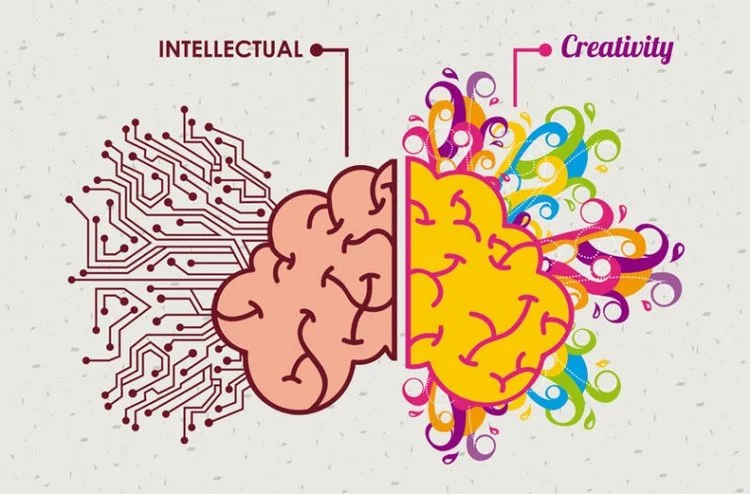
Why The Brain Thrives on What It Fears Most
Your perception of the world, life, yourself and others affects each and every decision you have ever made, or ever will make. Neuroscientist Beau Lotto has devoted much of his work to understanding perception, creativity, biases, and much more. He is the author of the book Deviate, which reveals startling truths about the brain and it’s perceptions. Beau argues that the next big innovation in the world is not a new technology, but rather a new way of seeing.
Everything we do in life we do to decrease uncertainty — Beau Lotto

Your perception of the world, life, yourself and others affects each and every decision you have ever made, or ever will make. Neuroscientist Beau Lotto has devoted much of his work to understanding perception, creativity, biases, and much more. He is the author of the book Deviate, which reveals startling truths about the brain and it’s perceptions. Beau argues that the next big innovation in the world is not a new technology, but rather a new way of seeing.
For A Deep Dive on Your Most Common Biases Check Out — http://www.successpodcast.com/weaponsofinfluence
Uncertainty of what your brain is receiving can lead to extreme consequences. Let’s take a simple example from Beau…
When you go down below in a boat and your eyes are moving and registering the boat, and your eyes are saying, “Oh, we’re standing still,” but your inner ears are saying, “No, no, we’re moving.” And your brain cannot deal with that conflict so it gets ill. — Beau Lotto
While getting a little seasick is not the end of the world the consequences of too much uncertainty can be tremendous. Too much uncertainty increases brain cell death. It decreases plasticity in the brain and transforms you into a more extreme version of yourself.
Think back to a time when you had to deal with extreme uncertainty. Was this a pleasant experience? Oftentimes when we are making extreme changes to our lives such as changing careers, moving to a new place, trying something potentially dangerous for the first time we see a drop in our health and mental state. This is because our brains are deeply wired to avoid this type of uncertainty at every turn.
Every minute of every day we are making hundreds of assumptions, which helps us mentally avoid uncertainty. As I type this I assume the chair I am sitting on will not give way and leave me sprawled out on the floor. I assume the desk in front of me was assembled correctly, I assume the keyboard on which I am typing will continue to work, and so on and so forth.
These assumptions are absolutely critical to our survival. Can you imagine what a nervous wreck we’d be if I stopped to make sure my chair was sturdy each minute. First of all I’d never finish writing this article but even worse I would most likely worry myself into no longer using this chair, checking the screws on my desk, and monitoring the battery life of my keyboard.
However, these assumptions can largely be a double edged sword themselves. Our brains are wired to take what is meaningless and assign it meaning. Look at the flip side, in the early development of human beings if I assumed that rustling sound was not a predator and it turned out to be a panther… it’s too late. I’m dead. Taking this information and all the inputs around you and assigning them meaning is the process of creating your own perceptions. The key is to be able to determine what can be assumed and what it worth checking out and worrying about.
Here’s the kicker.
If we do everything to avoid uncertainty, how will we ever see anything differently?
We do almost everything to avoid uncertainty. And yet the irony is that that’s the only place we can go if we’re ever going to see differently. — Beau Lotto
How would we ever be creative if we never dared to venture into the uncertainty of life? How would we learn to perceive the world differently through new information if all we did was avoid uncertainty our entire lives. Creativity begins with a question, a hypothesis, it begins with a “why?” or a “what if?” all which come through uncertainty.
This is also why it’s an interesting reaction when people become mad at one another for “flip-flopping” their opinions. Too often, especially in politics, individuals are criticized for changing their opinions to reflect new facts, new evidence, and new information. But how can we ever hope to grow and draw new conclusions if we ignore the uncertainty of new facts and opinions.
The irony of uncertainty is that while we were undoubtably hardwired to avoid it, it holds the key to our growth and to our success. As we noted, too much uncertainty for too long a period can have drastic consequences for your health but avoiding it altogether leaves one walking in place.

Lessons and Tools From Spy Recruiters, Astronauts, and Mental Masters
We’ve interviewed some incredible guests on The Science of Success. From many walks of life including spy recruiters, astronauts, bestselling authors, and more. Across each of our guest’s from widely different fields, we see many overlapping mindsets, strategies, and practices for achieving goals and a more effective life.

We’ve interviewed some incredible guests on The Science of Success. From many walks of life including spy recruiters, astronauts, bestselling authors, and more. Across each of our guest’s from widely different fields, we see many overlapping mindsets, strategies, and practices for achieving goals and a more effective life.
We’d like to share with you some of these mindset and strategies to help you achieve your goals. Whatever they may be…

Focus On Your Health
Psychology Secrets of Extreme Athletes, NFL Teams, & The World’s Top Performer with Dr. Michael Gervais — Dr.Michael Gervais has spent years and countless hours in the trenches with high performers. From Red Bull athletes and The Seattle Seahawks to everyday civilians, Gervais has been able to unlock the true potential of his clients by utilizing the psychology of high performance.
What’s Life’s Biggest Trap We Fall Into? — In Matt Bodnar’s widely popular and upvoted Quora answer he takes us through some of the biggest traps people fall into in life and how we can avoid each to get out of our own way in 2018.
The Skeptic’s Guide To Meditation with Dan Harris — Learn more about meditation and the science behind the practice. Dan Harris takes you through his personal journey (including a panic attack live on air) that led him to pursue meditation and report of the science behind the sometimes “woo woo” reputation.
The Neuroscience Behind Building A Sustainable Healthy Lifestyle with Foodist Darya Rose — Sticking to a diet plan can be very, very hard. Darya Rose takes us through how we can set the right physical health goals and use neuroscience to actually stick to them.

Overcome Your Fears
How Do You Become Mentally Strong? — In this Medium article Matt Bodnar take us through an incredible framework for developing mental toughness. Compiling and exploring some of the most validated strategies and tactics to push yourself and grow.
How This Astronaut Survived Going Blind In Space & Tools For Crushing Fear with Chris Hadfield — Chris Hadfield is one of the most decorated astronauts in history. On his first spacewalk he went momentarily blind and was able to remain calm and complete his mission. Chris takes us through some practical knowledge for overcoming irrational fears and accepting others.
Your Secret Weapon To Becoming Fearless with Jia Jiang — Most people actively will avoid rejection. How is this fear holding you back? Jia decided to actively seek rejection each day for 100 days and while his journey is very entertaining, the results he saw were very impactful.

Master Your Emotions
Discover Your Hidden Emotional Insights and What’s Truly Valuable to You with Dr. Susan David — Your emotions are there to communicate through your subconscious. By using Dr.Susan David’s framework and research you can begin to learn how listening to these emotions and using them as a compass can help you make peace with them and achieve more.
The Mental Tools Olympians, Traders, and Top Performers Use To Make High Pressure Decisions with Denise Shull — Denise Shull was the inspiration for Wendy Rhodes character on the Showtime show Billions. She’s coached countless high performers through high pressure situations by using their emotions and inner working to guide them. Find out how!

Get What You Want
Simple Strategies You Can Use To Get Anything You Want with The Godfather of Influence Dr. Robert Cialdini — Dr.Cialdini has been doing incredible work on the art of influence for years. Most recently he unveiled a researched backed tactic that you can begin to use today to help you influence anyone and make a great first impression.
How To Use Influence Tactics Like an FBI Agent — In this article from SUCCESS Magazine we highlight some of the key takeaways from all the military influence experts we’ve interviewed. Everyone from hostage negotiators to FBI Spy recruiters. Learn how you can begin to influence like a secret agent today!

Connect With Others
Never Eat Alone — How Relationship Expert Keith Ferrazzi Built His World Class Network — Keith Ferrazzi literally wrote the book on networking. Through his work and research in relationship building, Keith has identified mindsets and frameworks that you should apply to every interaction and relationship.
Proven Practices for Building The Ultimate Competitive Advantage with Todd Davis — Todd Davis is the Chief People Officer at Franklin Covey and wrote much of the company’s award-winning material. Todd takes us through several ways to build better relationships at work from all hierarchies and how to build the ultimate competitive advantage.

Build The Right Habits
Break Your Phone Addiction (and Your Other Bad Habits) with Charles Duhigg — Charles Duhigg is a Pulitzer Prize winning author and has devoted much of his life and work to discovering why we do the things we do. Specifically how our habits and routines can affect our lives for the better and for the worse. Learn how we can become the masters of our own habits today!
How You Can Use Behavior Design To Create any Habit You Want with Nir Eyal — Nir Eyal has worked with hundreds of companies to make their products more habit forming. From video games themselves to products that pull you back in such as Facebook and Instagram it’s all by design and has Nir’s fingerprints or framework all over it. Learn how you can use Nir’s framework to break your cycle and create the habits you want!

The Right Brain vs. The Left Brain: Do We Have a Choice?
There’s an age-old debate between the right brain, the left brain and whether or not we are able to use both evenly. After completely losing the function of the left side of her brain in an unexpected stroke, Harvard-trained neuroanatomist, Dr. Jill Taylor, stumbled upon new insight on our ability to strengthen both sides.

There’s an age-old debate between the right brain, the left brain and whether or not we are able to use both evenly. After completely losing the function of the left side of her brain in an unexpected stroke, Harvard-trained neuroanatomist, Dr. Jill Taylor, stumbled upon new insight on our ability to strengthen both sides.
Dr. Jill is the best-selling author of her memoir My Stroke of Insight, which recounts her experience in recovery after a severe stroke left her unable to walk, read, write or recall any of her life. Her iconic TED Talk has been viewed over 22 million times and her work has been featured all over the globe from Oprah, to The New York Times and much more.
In a recent interview on The Science of Success, Dr. Jill explains how we can create a balance between the right and left side of our brain. She says that the first and most important step in learning how to control both sides of your brain, is understanding the role each one has in your everyday life.
The Right Side
Think of the right side as your big picture thinker. The right side enjoys open schedules, freedom to explore and opportunities to innovate. The right side doesn’t like being confined, put in a box or sitting in a cubicle. Your right brain is what creates humor and wit. It’s open to new possibilities and enjoys being creative. The right side values the good of the whole community and is energized by helping others.
The Left Side
The left side brain is the detail-oriented thinker. This is the part of our brain that allows us to function in the real world. It keeps us organized and focused. The left brain is great at numbers and mechanics, and some would call it a perfectionist. The left brain values family, relationships, personal strengths and weaknesses, and is very focused on the details of who you are as a person.

Credit: www.brainmadesimple.com
Whole Brain Thinking
While most people tend to lean heavily towards one side or the other, there is a way to achieve whole brain thinking. Whole brain thinking is the perfect balance of the two and “in that blending together, comes a level of satisfaction,” — Dr. Jill on The Science of Success.
Exercising Your Weaker Side
Think about the cells in your brain like bicep muscles in your arms. If you only ever do bicep curls on your right arm, it will grow much larger and stronger than your left. If you start doing more curls on your left arm, eventually it will catch up and both arms will be even in strength. This concept is the same for the two different sides of your brain; the side you flex more will be dominant over the other.
The first step is thinking about and recognizing who you are and how you’re spending your time. Acknowledge which side of the brain you use day to day without even thinking about it.
Next, find some activities you might enjoy that will use the weaker side of your brain. Find people that are using the side you’re trying to strengthen, spend time with them and start doing some of the things that they do. What’s important here, is getting in the habit of exercising your weaker side.
One of the biggest factors in achieving whole brain thinking is to understanding that you get to choose, moment by moment, which side you step into and use.
“I think as we pay attention to what we are already doing and pay attention to what our own personal patterning is, we find the power to choose and we recognize when we have chosen,” — Dr. Jill on The Science of Success.
This skill of learning to observe and thus control your own brain can be used for other things as well. Dr. Jill suggests using this consciousness to turn around negative situations. In a moment of crisis, sadness or negativity, Dr. Jill recommends taking a step back and observing the reality in front of you, instead of engaging with your emotions about the events taking place. In other words, step out of your left brain and into your right.
“I don’t take myself that seriously. I don’t take any of this really seriously. Yet, at the same time, I take it all extremely seriously, because I’m here, I’m alive, I value life…because life to me is a precious and amazing thing,” — Dr. Jill on The Science of Success.
Take Control
Dr. Jill offers many tactical actions that you can implement in your life immediately in order to gain control over your whole brain. She suggests taking one hour and writing down everything you think of. Look back at your notes and determine whether you were more focused on small details or the big picture. Use this exercise to determine your standard or base level brain usage. From there, decide which circuitry, the right or the left, you need to run more of to even out the two sides of your brain.
There is no one more credible to offer this advice than Dr. Jill; someone who has not only studied neuroanatomy at the highest level, but who has experienced losing an entire part of her brain and having to regain it step by step.
If you enjoyed this…
I study strategies for evidence based growth. Sign up below to get a TON of specific evidence based books, resources, and recommendations on being happy and successful.
Adam Grant’s Guide To Success and Self-Awareness
As Wharton’s top-rated professor for the past six years running, Dr. Adam Grant knows a thing or two about what it takes to succeed. He’s one of the world’s 10 most influential management speakers, the best-selling author of Give & Take, Originals and Option B and a member of Fortune’s 40 under 40.

As Wharton’s top-rated professor for the past six years running, Dr. Adam Grant knows a thing or two about what it takes to succeed. He’s one of the world’s 10 most influential management speakers, the best-selling author of Give & Take, Originals and Option B and a member of Fortune’s 40 under 40.
In a recent interview, Adam shared with The Science of Success’s Matt Bodnarthe most impactful secrets to success, starting with self-awareness. In the world of self-awareness there’s a lot of talk about recognizing one’s own strengths and weaknesses. Dr. Grant argues, however, that it’s more beneficial and reliable to trust those around you to identify these weaknesses and not rely on your own (biased) soul searching.
Why Is It So Difficult To Be Self-Aware?
According to Dr. Grant, there are two main challenges when it comes to developing self-awareness. First, there are your own blind spots. These are shortcomings that the people around us can easily see, but that we might have a hard time identifying ourselves. As humans, we’re typically better at focusing on how we think we look, versus how others most likely see us. Our blind spots only become visible to us when we solicit outside feedback. When we understand how others view us in the world, it’s easier to change our behaviors and expectations.
Learn the top ten leadership blindspots and how to overcome them here.
We also must face our internal personal bias. Biases include the negative aspects of ourselves that we don’t want to see. For many, it can be easy to see ourselves in our own personal spotlight, as the hero of our own journey, which can lead to overconfidence.
“I think the big lesson here is that any time a trait is easy for other people to see or hard for us to admit, we can’t trust our own judgment of it,” — Adam Grant on The Science of Success
How We Overcome These Challenges
The good news is that these hurdles to becoming more self aware can be overcome. Dr. Grant’s solution is developing two networks of people; a support network and a challenge network.
Build a support network filled with people that you can count on to bring you up when you’re down. These should be the people you trust, those that will always give compliments and increase your confidence.
Your challenge network should be the people who will tell you that you’re not quite where you need to be. These are the people that will push you because they care about helping you get better.
“So if in the last six months somebody has given you really harsh feedback, you’ve probably done everything in your power to drop them from your life. In the short run, that might feel good, it might help with your motivation, but it destroys your opportunity to learn. I think we all need to embrace that challenge network if we want to reach our potential,” — Adam Grant on The Science of Success
When Asked, Be A Graceful Challenger
Many believe the “compliment sandwich,” is a good way to give feedback. This is when you offer criticism in between two compliments in order to lessen the blow. People mistakenly think this is the best way to offer negative feedback, but Grant argues this method only makes it harder for the receiver.
So if you find yourself a part of someone else’s challenge network follow this framework instead. Affirm a skill, value or achievement from one area then give your negative feedback in another. The idea is that you never want to give praise and criticism at the same time for the same project, piece of work or idea. This only serves to delude your feedback all together.
If you want to soften the blow of hard feedback praise something unrelated the receiver has done and start the conversation out in a positive light. Then change the subject to the project at hand and deliver your unbiased feedback. After all, you’re in someone’s challenge network because they trust you to push them. Give them what they expect.
Embrace The Devil’s Advocate
In every situation, business meeting, discussion, etc., make sure there is one person who genuinely disagrees with the majority opinion. It’s important that this person is not just playing a role, but truly has different ideas than the rest of the group. This person should be given the opportunity to argue passionately about their viewpoint thus stimulating divergent thinking. If done properly, the group will be more likely to reevaluate the situation on the table, gather new information, update their criteria and make a better decision in the end.
Make it known that no employee or partner has the right to withhold a critical opinion. Dr. Grant emphasizes the importance of creating a space and culture where dissenting ideas are encouraged. Everyone at the office should feel comfortable speaking up for his or her opinion no matter how different it is from the boss or from the group.
“Personality traits don’t predict behavior. Different ifs activate different thens.” — Adam Grant on The Science of Success
If you enjoyed this…
I study strategies for evidence based growth. Sign up below to get a TON of specific evidence based books, resources, and recommendations on being happy and successful.

What Makes Billionaire Ray Dalio So Special?
His accomplishments in the markets have made him one of the wealthiest Americans today. But if you begin to dive deeper you realize that’s not what makes Ray so special…

His accomplishments in the markets have made him one of the wealthiest American’s today. But if you begin to dive deeper you realize that’s not what makes Ray so special…
At The Science of Success, we obsess over Evidence Based Growth and learning what makes peak performers and titans of their crafts tick. Through examining their lives and work, we can take years of their experiences and research and apply what they’ve learned to our own lives. Thus, leading happier, healthier, and (hopefully) wealthier lives.
So… what makes Ray Dalio so special?
The Obvious
For the sake of the rest of this article let’s go ahead and knock out the obvious. Ray started and continues to grow the world’s largest hedge fund, Bridgewater Associates. Bridgewater currently has over $160 Billion (with a B!) worth of assets under management.
This has lead to Ray himself amassing a net worth of over $17.7 Billion. This amount of wealth and drive obviously make him a “special” person in business. He has attained a status and created a life that most can only dream about, filled with the things many only ever see on their vision boards.
BUT…
As with most incredible individuals and stories, this is just the WHAT of the situation. The HOW and the WHY behind Ray’s journey. The way he continues to approach life and the lessons he’s learned (and is still learning) is what makes him truly unique.

Credit: The Times
His First Job
Ray was born the only child of a jazz musician and a homemaker in Jackson Heights, Queens in 1949. Ray notes that at a young age, he was a terrible student and struggled in school.
“I was a bad student. I have a bad rote memory , and I didn’t like studying.” — Ray Dalio
Like many geniuses of their time who did not thrive in a classroom setting, Ray found other ways to contribute, learn, and make money. From the age of 12, he caddied at a local golf club near his home that was frequented by Wall Street investors. By listening to their tips and conversations Ray was able to begin learning about the stock market and made his first purchase of stock ever, investing in Northeastern Airlines.
Shortly after, Northeastern Airlines was taken over by another company and Ray saw his investment triple. What makes Ray’s beginnings unique is that despite not thriving within the traditional framework of education, he was able to find another way to absorb information. Continuing to learn about things that interested him, and put these learnings into action.
We see this time and again with several great young minds. Unable or unwilling to work within the confines of a traditional education, they find other ways to learn.
The golf course was near his childhood home, lucky. Those who frequented the course exposed him to Wall Street, lucky. Being taken under Donald Scott’s wing, lucky. However, all of this “luck” would have never come about had Ray not continued to work, put himself out there, and explore possibilities with an open mind, despite his poor rote memory and initial distaste for school.
Mindfulness

Credit: ValueWalk
Ray is very open about practicing mindfulness and it’s critical importance within his life. Most notably, Ray is an avid meditator and practices Transcendental Meditation which according to legend, he picked up after the Beatles visited India.
Meditation, more than any other factor, has been the reason for what success I’ve had — Ray Dalio
Ray practices meditation most mornings before heading into the office and follows his own technique…
“It’s just a mental exercise in which you are clearing your mind. Creativity comes from open-mindedness and centeredness — seeing things in a non-emotionally charged way.” — Ray Dalio
Not only does Ray practice Transcendental Meditation himself but he encourages his employees to incorporate the practice into their lives as well. Many claim his business and culture is built up of “intellectual NAVY SEALs”and he believes that Transcendental Meditation provides an effective balance to that drive and hard nosed determination.
If you’d like to put the power of Transcendental Meditation to the test yourself, here’s a guide to getting started, as well as an interview with Dan Harris who explains his method and his initial skepticism around the practice of meditation all together.
Removing His Ego
I imagine it must be hard to keep your ego in check as a billionaire. I’m also in no way saying that Ray, for his entire life, has had no ego. In the past there have been several stories of outlandish (yet always passionate) behavior. Including punching a former boss in the face over an argument.
On New Year’s Eve in 1974, Dalio went out drinking with his departmental boss, got into a disagreement, and slugged him…After being fired, he persuaded some of his clients to hire him as a consultant and founded Bridgewater, operating it out of his two-bedroom apartment. He was twenty-six years old. — John Cassidy, The New Yorker
While the story sounds a lot like something from a C+ Hollywood satire of the typical corporate office party with an open bar…it happens. We all act out and get cocky at times. You, me, and billionaires alike. The key is that we continue to grow, learn and mature through life, and Ray has done all three in spades. Ray has even commented on a video of himself from the 80s saying…

Ray in the early 1980s
"I look at that now, I think, “What an arrogant jerk!” — Ray Dalio, TED Stage
You see, there is a large difference between cockiness and confidence.
To scream from the mountaintop that you are the best and put others down simply for the sake of it, is ego and cockiness. To be sure of your position and be able to unapologetically defend it, that is confidence.
In fact, Ray has spent considerable time, money, and effort attempting to remove his ego from any and all decision making. At Bridgewater, each employee is subject to direct and completely unfiltered feedback, and Ray is no exception. A great example of this is in the email below Ray received from Jim Haskel…
Ray — you deserve a “D-” for your performance today in the meeting … you did not prepare at all because there is no way you could have and been that disorganized. In the future, I/we would ask you to take some time and prepare and maybe even I should come up and start talking to you to get you warmed up or something but we can’t let this happen again. If you in any way think my view is wrong, please ask the others or we can talk about it.
Now take a moment here and think. What would happen if you sent this kind of email to your boss? You might be fired, be asked to join your boss in a private meeting, you might even be escorted out of the building…but not at Bridgewater. Not only was Ray pleased with the feedback, he decided to share the email with all of his employees and again on the TED stage. The feedback did not pull any punches… and hey, that’s the idea.
In his book Principles we see another example of Ray removing his ego, personal life, and accomplishments from the principles he hopes to share. The 567 page book is made up of two parts. The first dives into Ray’s personal journey and the second is pure principles and teachings. In the first few pages he offers the reader an out and invitation to skip the portion related to himself…
I wouldn’t mind if you decided to skip this part of the book. If you do read it, try to look past me and my particular story to the logic and merit of the principles I describe. Think about them, weight them, and describe how much if at all they apply to you and your own life circumstances — and specifically, whether they can help you achieve your goals, whatever they may be. — Ray Dalio, Principles
Ray aims to provide the reader (you) with the value of his life and learnings, without having to hear his story. Which undoubtably takes a large amount of humility, especially in a book you took the time to write.
My painful mistakes shifted me from having a perspective of “I know I’m right” to having one of “How do I know I’m right?” — Ray Dalio
Removing your ego from your daily decision making can have incredible benefits on your daily life. Whether you systematize the process like Ray, or just make a conscious effort to remove your personal feelings about yourself from the situation you’ll notice the positive effects immediately.
Radical Transparency
Something truly unique about Ray’s approach to managing his business culture is the idea of “Radical Transparency.” The idea that everything everyone says, feels, or does, is open for honest feedback and evaluation.
Many praise this style of management as the way of the future, others liken it to a cult. One of the tools in fostering this culture was invented by Bridgewater themselves and is known as The Dot Collector.

One persons assessment of their peers in a single meeting
Bridgewater employees carry iPads into every meeting; as their coworkers speak, they register real-time feedback, grading one another on such criteria as assertiveness and open-mindedness, creativity, and maintaining high standards.

The view over time as peers continue to rank each other on their strengths and weaknesses
Over time, all those data points reveal the collective wisdom of the group — and, the thinking goes, expose each employee’s strengths and weaknesses. At first, Dalio says, receiving such candid feedback can be difficult. But eventually, he says, it challenges you to detach from your own ego. “It forces you to recognize that you are just one of those dots,” he says, “and now you have to make a choice: Do you want to be stuck with your opinion, or go above it all? It’s an out-of-body experience.”
This data is then made available to everyone and shapes the weight of your opinion in making company decisions. This data is also used to match you with the right teams and the right projects. As noted, this process at first can be very painful for some. It’s a hard, no nonsense look at who you are, backed by the numbers.
What some may remember as “golden rules” are also adopted into everyday business practices, but not in the way you might expect. We all know that it’s generally not a great idea to talk about someone behind their back. Well, why not take that idea to new heights as well?
One rule of radical transparency is that Bridgewater employees refrain from saying behind a person’s back anything that they wouldn’t say to his face.
To some, this can be seen as too blunt or as a power move. But to hear Ray explain it, this simply allows everyone to know where they stand with everyone else. Growth in any meaningful form is often painful. In the end, everyone grows through radical transparency, even if at time’s it can be quite awkward.
Once a tape recorder had been switched on, Jensen, McCormick, and Dalio discussed the possible promotion of an internal candidate to a senior-management role. McCormick, a soft-spoken forty-five-year-old who studied engineering at West Point, argued that the candidate’s prior experience at a big Wall Street firm indicated that he could probably do the job. Dalio disagreed. An investment bank is a “totally different world,” he said. But, rather than continue the discussion, he asked one of his assistants to call in the candidate. One rule of radical transparency is that Bridgewater employees refrain from saying behind a person’s back anything that they wouldn’t say to his face.
The man arrived and stood before Dalio’s desk. Dalio explained what the discussion was about and said, “I don’t imagine that you would be a good fit for the job.” The man took a seat, and Dalio and McCormick continued their discussion about his qualifications. The candidate explained his experience on Wall Street and said he thought he could do the job well. Dalio leaned back in his chair, looking skeptical. The employee didn’t get the promotion.
Ray is also quick to point out that the culture of radical transparency is not for everyone. Around 1/3 of Bridgewater’s new hires leave the company in less than 18 months. Although, for those who accept the model and buy in wholeheartedly, it becomes a way of life.
One of the most beneficial consequences of radical transparency is a hard, unforgiving, uncompromising drive towards self-awareness. When you embrace the process and are open to the objective feedback you receive, you are forced to see yourself for what you are. This can be scary with a fixed mindset, however, with a growth mindset this can be one of the most enlightening revelations of your lifetime.
I recommend checking out The Secret Weapon of the 21st Century for more on cultivating self-awareness.
And why not embrace these ideas? A culture of radical transparency may be shocking to some but it also lets everyone know where they stand. People will also be much more careful with their words and actions when they know they will be open to the public. I think we would see a lot of the more common issues in the workplace (and the world at large) disappear if we had more radical transparency.
If you had to sum Ray Dalio up in a few words I think most would agree “Radical Transparency” would be the right fit.
Not The Hero We Wanted, But Maybe The One We Needed?
On several occasions, Ray has attempted to warn the United States government of upcoming crashes and less than sustainable programs. Certainly (and justifiably) the government must be skeptical and wary of such warnings, especially coming from someone involved in markets, potentially with something to gain. However, Ray has been correct on several occasions including in 2007 before one of the largest market crashes in history…
Searching for historical precedents, Bridgewater put together detailed histories of previous credit crises, going back to Weimar Germany. The firm’s researchers also went through the public accounts of nearly all the major financial institutions in the world and constructed estimates of how much money they stood to lose from bad debts. The figure they came up with was eight hundred and thirty-nine billion dollars. Armed with this information, Dalio visited the Treasury Department in December, 2007, and met with some of Treasury Secretary Henry Paulson’s staff. Nobody took much notice of what he said, but he went on to the White House, where he presented his numbers to some senior economic staffers. “Ray laid out the argument that the losses he foresaw in the banking system were astronomical,” a former Bush Administration official who attended the White House meeting recalled. “Everybody else was talking about liquidity. Ray was talking about solvency.” His warnings ignored in Washington, Dalio issued more jeremiads to his clients. “If the economy goes down, it will not be a typical recession,” his newsletter said in January, 2008.
Pay attention to something here — in an effort to inform the appropriate powers Ray began with the Treasury Department, and didn’t stop. Despite the fact that he was largely ignored by the department, he continued his crusade to the White House.
Hedge fund managers weighing in on the inevitability of the ups and downs of the market is nothing new. It is however notable and commendable that such a continued effort was made to sound the alarm to those with the ability to attempt to change the circumstances.
He Gives it ALL Away
Perhaps one of the most incredible things about Ray Dalio and his principles is that he gives them away, largely for free. In recent months Ray has been on a mission to spread awareness not only of his book but of the culture and tools he has created in an effort to help others achieve their goals.
Below are a few of my favorite pieces of free content that will help you see things through the eyes of the world’s most successful hedge fund manager. These ideas, principles, and tools may even help you harness the Science of Success. God Speed.
Bridgewater’s Entire Research Library Is Open To The Public — Here you can look back at the various research and findings Ray and his team have made throughout the years. These are incredible resources for those interested in how the markets (and largely the world) work.
How The Economic Machine Works — This 30-minute video can provide you with more knowledge than most Econ. 101 classes could.
Want To Go Deeper On How The Economic Machine Works? — Ray provides these FREE tools and deeper explanations of every concept mentioned in the above video. Topics include long term and short term debt, leveraging, and much more!
Ray’s TED Talk — Gives you a real-time look at Ray’s past and present and how he goes about using the Dot Collector to make better decisions and weigh ideas.
If you enjoyed this…
I study strategies for evidence based growth. Sign up below to get a TON of specific evidence based books, resources, and recommendations on being happy and successful.

How To Ask Great Questions on a Podcast
The ability to ask good questions is one of the most valuable tools in life. Not only do great questions lead to great podcast content but they also allow you to learn more completely from another’s experience.

The ability to ask good questions is one of the most valuable tools in life. Not only do great questions lead to great podcast content but they also allow you to learn more completely from another’s experience.
The best questions to ask will depend on what the format of your show is. However, I’ve always shared these few pieces of advice to those we consult with at The Science of Success to help them keep things interesting.
Do Your Research Prior
This should go without saying but if someone is taking the time to come on your show, especially someone highly sought after, do your research ahead of time. What I mean by this is take the time to search their recent projects and interviews.
This allows you to pick up on topics and points that they typically hit during interviews. This can be a great way to decide what you want to hit on, and what you want to miss or gloss over. Say your guest told a story on a previous interview and after the story you had a follow up that the interviewer missed. Note the story, mention it in your interview then present your question.
This research allows you to get a feel for what they will want to talk about but more importantly also allows you to find something original to ask that has not been asked before and makes your content original and potentially newsworthy.
Ask Questions You Actually Care About
Remember to ask questions that you actually are interested in hearing the answer to. This does not mean you should ignore the central theme or project they are looking to push. (If they’re on your show you should be interested…right?) But find a way to put your spin, humor, thoughts, or insights into the phrasing or positioning of the questions.
Always stay engaged in the conversation. Nothing is worse than speaking to someone who you can tell is just waiting for their turn to speak. Likewise, most can tell when you are already planning your next question and have checked out during their answer.
Staying more engaged will come with experience as well. If you’re not comfortable on the mic yet it might be harder to stay present but shaping the questions in a way that reflects your interests or personality will lead to a conversational interview.
Go Beyond The Surface
When someone comes out with a new book, makes the news, or starts a new project that is getting a lot of attention, they’re most likely being interviewed A LOT. It’s no fault of theirs but often people fall into routines and tend to give the same answers and stories in each interview they do. This makes things easier on them and ensures consistency in their message.
But oftentimes does not lead to anything original that gives listeners a reason to listen to you over others.
Think beyond the surface. So your TED talk on X topic has gotten over 5 million views? — Let them go over the content in their TED talk — Then don’t be afraid to dig. What was it that you saw in your life or in the world that made you think this was necessary to research? Why do you love X topic so much, how were you introduced to it? What does it mean to you? Who showed you X topic?
All these example questions go beyond what someone can typically find with a google search.
For Example. We interviewed Kamal Ravikant on The Science of Successregarding his latest book Rebirth. He told us about the book and some of the lessons in it but then Matt asked him “Why Spain? Why a pilgrimage?” and the answer we got is not only gold but is something you could never find in a search…
You want the truth? I was in Italy visiting a friend from college, and we were at this beautiful Italian woman’s house and we were very drunk on grappa that her grandmother made, and I was trying to impress her, and she told me about this pilgrimage and I said I would walk it. So I came up with the idea when I was really, really drunk trying to impress a beautiful Italian woman. The next day when I woke up I was like, “Well that was interesting, but it seems cool. Let me just go do it for a few days.” So I went off and I did it, and ended up doing the whole thing. But the whole thing started off being drunk trying to impress a woman, which was pretty much where all a lot of great male stories start. — Kamal Ravikant on The Science of Success.
So now we know the funny and completely original story of how Kamal decided to take his pilgrimage and ultimately experience the source material for his best selling book.
Original stories and thoughts behind the creation are magic. Not just the whatyou did or created, but the WHY.
Don’t Be Afraid To Push and Dig
Not everyone likes to go off script. Sometimes you have to push someone a little more in order to get great information out of someone.
NOTE: BE RESPECTFUL. ALWAYS.
However, don’t be afraid to push someone to open up a little but. Using The Mirroring Technique can be a great way to get someone to divulge more information without even having to directly ask. It goes something like this…
Person 1: To get someone to tip their hand and clarify, simply repeat the last three to five keywords in their sentence.
Person 2: You repeat the last keywords?
Person 1: Yeah, pretty crazy right? What that does is it causes me to explain my point again from a different angle, revealing more information that could be extremely valuable and also it helps you decipher my true desired outcomes and motivations.
- Chris Voss on The Science of Success
See there? Person 1 gave more information and Person 2 never even had to ask directly.
Sometimes however you have to ask directly and a great way to push for more information is to ask about the surrounding emotions behind an action, a project, or story. “How did that make you feel?” “What was your biggest takeaway from that?”
Storytelling Wins…Always
Whenever possible, tee up a story. Stories stick with people. If I simply explain something to you, it’s easily forgotten. If I can picture it in my head and play it out as if it were a movie. I’ll remember it.
Utilize Storytelling!
If you enjoyed this…
I study strategies for evidence based growth. Drop your email here to get my weekly “Mindset Monday” email! I’d also love to talk podcasting with anyone who wants to get out there and have their voice be heard!!

One Job Interview Question That Will Set You Apart and Make You Instantly More Qualified
There are few situations in a young professionals life more stressful than a job interview. Especially for those first time job hunters who are unsure of what to expect. While waiting for your interview you’re left sitting alone with your thoughts. Running through all your relevant experiences you want to mention in hopes of influencing the interviewer or panel and landing a job.

Never let this view intimidate you again
There are few situations in a young professionals life more stressful than a job interview. Especially for those first time job hunters who are unsure of what to expect. While waiting for your interview you’re left sitting alone with your thoughts. Running through all your relevant experiences you want to mention in hopes of influencing the interviewer or panel and landing a job.
Luckily, the “godfather of influence” is here to help you land that job and start your interview off on the right foot. Dr. Robert Cialdini is the best selling author of Influence & most recently Pre-Suasion. His teaching and methods have been used across the globe with many big name companies on his client list. Recently, on The Science of Success he shared his best method for starting your job interview off on the right foot and leaving a great impression.
“There is a key moment that allows a communicator to create a state of mind in recipients,” notes Dr. Cialdini. Describing the precise moment in which you sit down to begin your interview. “We’ve always been taught to say, “I’m very happy to be here. I look forward to answering all of the questions you have for me.” Which is a perfectly polite way to begin, but according to Cialdini, there’s even more than can be done in these crucial moments before questioning begins.
While there are several great conversation starters out there, Cialdini recommends a different route, “Here’s I’m going to suggest you do.” also say, “But I’m curious. I have a question for YOU.
Why did you invite me here today? What was it about my resume that was attractive to you?”
By asking this one simple question you shift the interviewers to focus to your strengths at the start of the interview. They will search your resume and say, “Well, it’s because your credentials are what we want, or it’s because the values that you indicated fit with our value statement.”
You got the interview because something stood out that potentially made you qualified for the position. Start out the interview directing their focus to those strengths and reminding them that you’re a strong candidate. This focus on your strengths will last not only in the first few minutes of questioning, but throughout the entire interview. Cialdini’s Pre-suasion technique will frame you in a positive light throughout the interview, but also shows you what qualities the interviewer wants to focus on and cares about most.
Listen to their responses taking particular note of what they like about your resume. These are the skills and points that they find to be most relevant to the open position and build on that! Where else can you utilize the Pre-Suasion method in your life?
If you enjoyed this…
I study strategies for evidence based growth. Sign up below to get a TON of specific evidence based books, resources, and recommendations on being happy and successful.
The Research Backed Guide To Being Lucky
Are you a lucky person?
Shockingly, your answer to that question actually has more to do with how lucky you are than anything else.
Let me ask you an important question…

Are you a lucky person?
Shockingly, your answer to that question actually has more to do with how lucky you are than anything else. Recently, science has proven that we actually can create our own luck. This groundbreaking research reveals several evidence-based tactics you can use to help you stumble into that next great opportunity.
Dr. Richard Wiseman has been named “The Most Interesting and Innovative Experimental Psychologist in the World Today” by The Scientific American. His research and experiments have shed light on some of science’s most interesting topics and debunked several common “self-help” practices.
In a recent interview on The Science of Success, Dr. Wiseman explains how you can find more luck in your life today with science based steps.
But First, A Story…
So you think you’re unlucky, huh? Before we get into the steps, let’s review some of the stories from the Luck Experiments. Dr. Wiseman began by gathering thousands of people who considered themselves lucky or unlucky.
To give you some context, this was the experience of one self-proclaimed “unlucky” person…
· 5 Car Accidents Within 50 Miles — On the same trip.
· Signed Up For A Dating Service…
1. First date broke a leg on the way to meet her.
2. Second, ran into a glass door and broke his nose.
3. When she got engaged, the church she was to be married in burnt down the day before her wedding.
So… maybe you aren’t as unlucky as you thought. Despite these experiences, through adopting some of the mindsets in Dr. Wiseman’s research and implementing some new practices in her life, she actually is luckier.
So let’s get into it, here’s how you can go from unlucky to lucky, in no time at all.
The Newspaper Effect — Your Attention Spotlight

One of the most interesting differences between lucky and unlucky people is their attention spotlight. Lucky people are always looking for an opportunity in the details of everyday life. Where the unlucky tend to move forward without paying as much attention and without looking for luck. This hypothesis was proven and illustrated by Dr. Wiseman’s “Newspaper Experiment”
Dr. Wiseman began by asking participants to classify themselves as lucky or unlucky. They were then asked to flip through a newspaper and count the number of pictures they saw. As a reward they would be given $100. What he did not tell participants was that there were two huge time saving opportunities embedded in the newspaper.
“One was a half-page ad with massive type that said “Stop Counting. There are 42 photographs in this newspaper” and the other was another half page ad that said, “Tell the experimenter you’ve seen this ad and collect your $100 now.” Recalls Dr. Wiseman. The findings were extremely clear. Those who considered themselves lucky saw the ad and collected their money immediately. Those who identified as unlucky sat and counted each ad, missing the valuable time saving message.
When those who considered themselves unlucky felt pushed, stressed, or concerned, their attention narrowed, they put their heads down and droned through the task. In contrast, those who identified themselves as lucky expanded their attention to try and grasp the details of what they were doing. Causing them to get “lucky” and spot this time saving message. If we take the time to slow down, pay attention to what we are doing, and believe we’re lucky, studies show, we will be.
Write It Down

In his next experiment Dr. Wiseman set out to see if we could actually change our luck. “We thought, if we take a group of people who are not particularly lucky or unlucky and get them to think and behave like a lucky person, does that increase their luck?” recalls Dr. Wiseman.
In order to shift the subject’s mindsets they were asked to keep a “luck journal”. Dr. Wiseman lays out the rules, “We asked that at the end of each day they write down the most positive thing that happened or most positive thought they had that day. Or, in some cases, something negative that used to happen that no longer happens, or at very least some thought of gratitude.”
The participants who kept these journals reoriented themselves extremely quickly. They began to see the good things in their lives and the opportunities in front of them. “It’s the most simple interventions we found had the biggest impacts,” notes Dr. Wiseman. Journaling and putting thoughts to paper has been proven to have astounding mental health benefits. By focusing on the good that happens each day we rewire our brains to see more opportunity in each day. Thus increasing how “lucky” we feel with each day.
The Silver Linings Playbook
Once you’ve begun focusing on the positive, it can be hard to stop. Carol Dweck was the first to coin the term “Growth Mindset.” One of the key pillars to a growth mindset is learning and seeing the positive in everything. If you try something and you fail, don’t beat yourself up; focus on what you learned and how you can avoid the same pitfalls in the future. This keeps us moving forward and increase how “lucky” we are in the future as we know what not to do.
By constantly thinking you’re lucky it’s incredible how it changes your perspective of everything. Dr. Wiseman recounts a slightly comical but impactful scenario, “A lucky person would take something as negative as falling down the stairs and find the good. Sure, I fell down the stairs and broke my leg, but if I had landed slightly to the left. I would have broken both of them, lucky.”
You may be thinking that breaking one leg is still a poor outcome. It’s those who train their brain to regard themselves as lucky however who do not dwell on the negative but rather find the positive, shift their focus there, and move forward.
Don’t Be Scared of Change

Oddly enough as Dr. Wiseman explains some people enjoy being unlucky. “About 20% of unlucky people rather enjoy being unlucky. Their self-identity is bound up with that.” This 20% enjoy being the clumsy guest at a party, enjoy never having things work out because on some level, it gives them an excuse.
These people according to the experiments are extremely hard to reach. While thinking lucky can dramatically change your life, you have to want to change to make it happen.
So start writing your own luck journal. Shift the way you think about yourself and the rest will trickle down into how you see the world and interact with others. If you want to start being lucky today, believe it to achieve it.
If you enjoyed this…
I study strategies for evidence based growth. Sign up below to get a TON of specific evidence based books, resources, and recommendations on being happy and successful.

How Abraham Lincoln Turned Struggle Into The Strength To Change The World
History is filled with tales of great men and women and their triumphs. But rarely do we get a look into one of the largest factors that made them great, their struggles. Specifically their internal, lesser-known struggles, that shaped how they saw the world around them and thus, allowed them to approach changing the world in a unique way.

History is filled with tales of great men and women and their triumphs. But rarely do we get a look into one of the largest factors that made them great, their struggles. Specifically their internal, lesser-known struggles, that shaped how they saw the world around them and thus, allowed them to approach changing the world in a unique way.
Dr. Gail Saltz has devoted countless hours to examining some of history’s most prominent figures from the inside out in what is known as a “psychobiography”. Dr. Saltz is a Clinical Associate Professor of Psychiatry at the New York Presbyterian Hospital Weill Cornell School of Medicine and a psychoanalyst with the New York Psychoanalytic Institute. Her work has been featured on CNN, Good Morning America, The Oprah Winfrey Show, and more! Recently Gail sat down with The Science of Success Podcast with Matt Bodnar and shared some of the results of her “psychobiographies” to give us a look inside some of history’s most well-known figures heads.
“Close to half of Americans struggle with some sort of mental health issue” explains Gail. “In my psychobiography series, we look at iconic figures and sort of what made them tick…what shaped them into the person that they ultimately became.” By studying these figures in this way we get a peek into their view of the world. Not only that but “normal” people can find comfort in the idea that even these great figures were far from perfect. “These struggles, not only did they overcome them, but often what they are remembered for in history that we find so astonishing is in some ways a direct result of the thing they struggled with.”
Many do not know this but one of our country’s greatest presidents Abraham Lincoln waged a lifelong battle with depression. His melancholy and quiet reflective nature is well documented throughout his life. It was this internal battle however that gave him the ability to empathize and be more accepting of others, just as he had had to learn to be more accepting of himself. “The ability to really tap into what other people are thinking and feeling and being very sensitive to that helped Lincoln to be the kind of president that he was,” notes Gail. It was learning to be accepting and forgiving of himself that helped Lincoln guide our country through one of the hardest times in the history of our nation.
Gail points out, “People with depression are often seen as kind of romantic figures, really pondering, really thoughtful…but it really can cause terrible suffering as well. But on the flip side, Lincoln’s ability to tap into what other people were thinking and really be attuned to that allowed him to bring in political partners and work with other groups and not erect a wall but instead extend himself and stand in other people’s shoes in a unique way”
History is filled with figures whose internal struggles in some ways helped them to change the world from Einstein, Vincent Van Gogh, and even Leonardo Da Vinci. Gail is quick to point out that while these figures were able to use their struggles to their advantage, they lived in a different time. If you are struggling with something serious be sure to seek medical evaluation and potential treatment.
If you enjoyed this…
I study strategies for evidence-based growth. Sign up below to get a TON of specific evidence-based books, resources, and recommendations on being happy and successful.
This Will Make You Thrive In Chaos & Uncertainty — Strategies From The World’s Most Legendary Fighter Pilot

The most legendary fighter pilot to ever walk the face of the earth knew what it took to thrive in the chaos and uncertainty of war. His life is one of the greatest largely untold stories of the last century.
This man’s name was John Boyd. But John Boyd went by many names in his life. During his time as the premier instructor at the Air Force Fighter Weapons School at Nellis (the Navy later copied this school and named it “Top Gun”) he was known as “40 Second Boyd” because he never lost a single dogfight and would take less than 40 seconds to defeat any opponent.Pilots from around the globe flew to Nellis to challenge him. All went home defeated.
Later, when Boyd would go on to confront the entire Air Force establishment, and fundamentally change the way the United States military fights and wins wars he would earn the nickname “The Mad Major.” He literally wrote the book on air-to-air combat with his Aerial Attack Study, combined the concept of entropy from physics to create the “Energy Maneuverability” theory that transformed how militaries around the world evaluate aircraft performance. Boyd is known as the father of the F15, F16 and (along with Pierre Sprey) the A10 Warthog.
That was just Boyd’s warm up act. Fed up with military bureaucracy he retired and immersed himself in a massive deep dive of everything from psychology, to philosophy, to creativity and much more. Boyd earned his final nickname “Ghengis John” when he merged the knowledge across all of these disciplines — along with a complete study of every recorded conflict in human history — to formulate a theory of war called “Patterns of Conflict.”Patterns transformed US warfighting doctrine, reshaped the US Marine Corps, and was the impetus behind one of the most devastating and rapid military campaigns in military history — the 100 hour allied victory in The Gulf War.
In short, John Boyd was a man of many talents. The lessons Boyd discovered scorching through the sky at the speed of sound are the tools that will make you someone who thrives in a chaotic and uncertain world, too.

The Biggest Lessons From Studying Every Major Conflict in Recorded History
Patterns of conflict was a massive undertaking — so much so that Boyd “condensed” these learnings into a 14 hour briefing and refused to give the briefing to anyone who wouldn’t sit through all 14 hours. Once being ordered by a General to give him a shortened briefing, Boyd told the General to “get fucked.” That General never got to see Patterns of Conflict.
There were several core ideas within Patterns. You’re probably not fighting a war anytime soon (if you are — you can get the full slides of the briefing here, though without Boyd delivering them, they are missing a lot of context) so I’ll spare you the 14 hours and give you a few key ideas below.
Here were the key themes of Patterns of Conflict:
· Deception
· Agility
· Fluidity of Action
· Strength Against Weakness
· Attack with Multiple Thrusts
· The Power of Ambiguity

These are the major commonalities Boyd discovered when studying every successful military campaign in recorded history — especially with a focus on examining situations where an outnumbered or disadvantaged army won the engagement.
These principles form the core of the concept of “Maneuver Warfare” which Boyd was a staunch advocate of. These are the same themes that led to the stunningly rapid US victory in the Gulf War.
The key idea of these principles is to disorient and confuse your enemy, to cause them to unravel before you even engage in combat.
That’s all well and good and believe me I love a good military history as much as anyone (after all I did read Boyd’s massive biography) — but what I really care about is applying these principles to my life and business.
After all, business and war are very different. While in warfighting the idea is to destroy the enemy, in business that is not always possible and you also have to proactively build your own business and grow your sales.
There is a major shared thread between these two domains however. A thread that, once pulled, can lead us some major insights into how we can use the lessons of Genghis John to thrive in chaos and uncertainty.
How To Thrive In Chaos, Like a Fighter Pilot
This common thread, between the military and business, is that in both cases groups of people are working together under immense pressure and stress to try and create results.
Looking under the hood at some of the greatest military victories of all time, Boyd uncovered several key ideas around organizing people in tough situations that are directly applicable to business and life. These are the cornerstone of thriving under uncertainty.

Fight The Enemy — Not The Terrain
Boyd’s most well known idea is the concept of the “OODA” loop. OODA Loop stands for Observe, Orient, Decide, Act. This is framework designed to explain the process of collecting information, interpreting it, deciding what to do with it, and then taking action.
Much has been written about the OODA loop (here’s a great in-depth explanation of it) but I want to focus on one particular aspect, the piece that Boyd thought was the most important — Orientation.
It’s easy to skip over Orientation or think it’s essentially the same as Observation. This couldn’t be further from the truth. Orientation is about your relationship to reality and the observations you’re seeing.
Orientation is about confronting your cognitive biases, your ego, and your own limited perception of the world — peeling back those layers so you can get a clear picture of reality as it truly is, not as you wish it to be.
In tough, confusing and uncertain situations we often get stuck — frozen in what was — not accepting things as they are because we don’t like them or we wish that they were different.
This is one of the most devastatingly sinister cognitive biases and can put you in serious jeopardy.
Boyd sums this up beautifully with a simple quote:
“Fight the enemy, not the terrain.” — Col. John Boyd
Don’t get stuck in your conceptions of what “should” be — don’t fight the terrain — fight the enemy as they are, not as you want them to be.
This is a lesson not only uncovered in Boyd’s deep dive into human conflict and the path to victory, but shared by world champions and financial traders.
World champion martial artist and international chess master Josh Waitzkin sums this idea up powerfully as well:
“While I learned with open pores — no ego in the way — it seemed that many other students were frozen in place, repeating their errors over and over, unable to improve because of a fear of releasing old habits. When [our teacher] made suggestions, they would explain their thinking in an attempt to justify themselves. They were locked up by the need to be correct…[They] got stuck, like the guys doing [martial arts] who don’t learn from their mistakes and practice with a desperate need to win, to be right, to have everything under control. This ultimately cripples growth.” — Josh Waitzkin, The Art of Learning
If we fail to properly orient ourselves — to see our own weaknesses, biases, flaws in our thinking and much more, we prevent ourselves from growth and we invite disaster.
Trader Jim Paul describes the same danger of getting stuck in your ego — and losing sight of the best course of action — in his book “What I Learned Losing a Million Dollars”:
“Taking either success or failure personally means, by definition, that your ego has become involved and you are in jeopardy of incurring losses due to psychological factors. Having tied your self-worth to the vicissitudes of factors beyond your control, you will be primarily concerned with protecting your ego rather than trying to determine the appropriate course of action.”- Jim Paul
You must be aware of your Orientation and consciously work to sweep away ego distortions and cognitive biases so that you can get a crystal clear picture of reality.
A tool like Charlie Munger’s Psychology of Misjudgment (a list of mental models that cause people to make bad decisions) is an excellent starting place for this. Once you’ve done that it’s often easy to Decide what to do and Act on it.

Agility & Rapid Tempo
Boyd constantly preached the importance of “Agility.” It’s critical to understand that Agility does not mean speed, but rather speed of decision-making.
The ability to rapidly move through “decision cycles” (Boyd’s OODA Loops) is what distinguished victory from defeat.
Here’s how Boyd himself put it:
“In order to win, we should operate at a faster tempo or rhythm than our adversaries — or, better yet, get inside [the] adversary’s Observation-Orientation-Decision-Action time cycle or loop … Such activity will make us appear ambiguous (unpredictable) thereby generate confusion and disorder among our adversaries — since our adversaries will be unable to generate mental images or pictures that agree with the menacing, as well as faster transient rhythm or patterns, they are competing against.” — Col. John Boyd
This quote also underscores the power and importance of building clear and accurate mental models, which reinforces our need to Orient properly.
If you’re working to grow and improve yourself — the faster you can run through decision cycles (OODA Loops) and break away from the biases and errors that will keep you frozen in place, the faster you will grow. This rapid iteration and execution of OODA loops is how you see some people quickly advance while others seem to be stuck in place.
In life and business — this principle applies to both competitive threats and opportunities. The more rapidly you can Orient yourself to what’s really true, accurately collect information about the problem, the market, your product, etc — the faster you can make the correct decision.
Over time this slightly incremental speed advantage generates massive results. Without a rapid decision-making and analysis tempo, you’re leaving yourself at risk for external forces (competitors, markets, etc) to move away from where you think they are — and your understanding of those dynamics will be flawed and incomplete, leading to a poor Orientation.
Schwerpunkt
Pronounced “Shh-where-punked” — the notion of Schwerpunkt is the single most important organizational principle to come out of Boyds work in Patterns. Schwerpunkt is a vital tool for working with others and thriving under chaos and uncertainty.
Schwerpunk is one of those words that doesn’t fully translate from German to English. The meaning is rich with an idea that a single definition cannot express. The definition of Schwerpunkt is something like center of gravity, crucial focal point, point of the main effort, key goal, or commander’s intent.
This guiding principle explains another one of the most devastating military campaigns in recent history — the Blitzkrieg of WW2. German forces operated under a largely decentralized decision-making structure that was imbued with mutual trust and the ability for unit commanders in the field to make the key decisions — in alignment with the overall Schwerpunkt of the campaign.
This focus on decentralized organizational structures — where the core goal, key focus, and commander’s intent (aka Schwerpunkt) is communicated and understood by everyone — is a cornerstone of the most successful military campaigns in history.
When you let decisions happen on the “front lines” — you’re empowering people to make decisions not only much more rapidly but with much more accurate and real time information.
More importantly for you and me — it’s also a highly effect management tactic and organizational structure for modern day organizations.
Books like The Outsiders have studied companies that massively outperform over a long period of time and the concept of a highly decentralized organization that pushes decision-making to the lowest level possible is one of the cornerstones of those businesses. Warren Buffet’s Berkshire Hathaway is a classic example of a highly decentralized company.

You Can Become Someone Who Thrives In Chaos and Uncertainty
The powerful toolkit of Orientation, Agility, and Schwerpunkt will allow you to thrive in any chaotic or uncertain environments. These ideas are literally battle tested in the most unforgiving crucible imaginable — war.
Boyd explains how all these concepts fit together neatly and why they are so powerful for thriving under adversity and under stressful and chaotic situations.
“War is ever changing, and men are ever fallible” -Col. John Boyd
I like to adjust that slightly to:
“Life & Business are ever changing, and people are ever fallible.”
Cognitive biases and the inherent biological limits of the human brainconstantly cause people to make mistakes. If you are properly orienting yourself, not getting frozen in your past conceptions of reality, and rapidly iterating through your decision-cycles — you will be running circles around your competition and aligned with market demand and expectations — setting yourself up for success.
John Boyd was the ultimate bad ass. He lived an incredible life, fought in three wars and transformed the way our military fights and wins.
The lessons Boyd uncovered in Patterns have the power to transform you into someone who thrives under chaotic, uncertain and adverse conditions.
As Boyd would say, what are you waiting for, Tiger?

Learning More About Boyd
If you want to learn more about Boyd here are a few resources.
I’ve created a Guide & Mind Map that summarizes my key learnings from John Boyd and the major themes and ideas works by and about Boyd. You can download the guide here.
I also highly suggest reading his Biography “John Boyd The Fighter Pilot Who Changed The Art of War”
If you want to dig into the source material, here is a catalogue of all of Boyd’s work in a military archive.
If you enjoyed this…
I study strategies for evidence based growth. Sign up below to get your Mind Map on the Lessons of John Boyd's Life along with a bunch of other sweet goodies which gives a TON of specific evidence based resources and recommendations on being happy and successful.
Creating Rocket Ships From Thin Air

No matter what your job is — no matter what you’re working on — creativity and resourcefulness are the cornerstones of building a successful life.
I’m sure you’ve heard the quote:
“It’s not the lack of resources, it’s your lack of resourcefulness that stops you.” — Tony Robbins
History is filled with examples of people who’ve achieved epic things thanks to being resourceful, despite having a lack of resources.
One of my favorites is the story of how Peter Diamandis launched the creation of a spaceship. He did this with no money and no engineering ability but got it done purely through the raw power of resourcefulness.
Peter wanted a spaceship. Pretty ambitious, right? To start, he didn’t have the money, he didn’t have the technical ability — he didn’t have any real resources at all to help him build that spaceship.
And yet — through sheer creativity he created the X Prize– and found a sponsor to fund it — effectively leveraging some of the smartest people in the world to create dozens of space ship designs and ultimately produce the SpaceShipOne.
So if Peter can create a freakin rocket ship out of thin air — is it possible you could get a bit more resourceful and creative towards achieving your goals?
I’ve been there too. I was stuck in the same rut in my life — feeling frustrated and thinking that nothing I could do would make a difference in my life and business
But then I broke out of that rut by beginning a daily creativity practice that has helped me get super focused and incredibly creative.
It’s helped me begin building my own rocket ships and it can do the same for you, here’s how.
How To Build Your Creative Rocket Ship
The way I execute this is simple — every morning (at least three times a week) I force myself to brainstorm ten ideas.
This could be ten ideas for a new business, ten ideas to fix a problem in my current business, ten ways to get more customers, ten possible pivots for my business, ten ways to get more free time — any challenge you are facing in life or other areas where you want to improve and move forward.
I always keep a list of topics created ahead of time, that I add to on the fly using Evernote, so I don’t spend my time thinking “what should I journal about today?” — I always have a steady list of topics I want to apply this method to.
I’ve found this to be incredibly powerful.
In a company where I’ve recently taken over as CEO, I was facing a major challenge and I could not figure out how to solve it. I kept thinking of one or two solutions but was telling myself (in my internal dialogue and self talk) “there aren’t many things I can do to solve this problem.”
So I added that challenge to my list of topics to journal on.
When I set out to brainstorm 10 ways to solve this problem — I ended up finding 18 possible solutions — none of which I had implemented or executed yet.
It is much easier is it to face that challenge now, knowing that I have a tool kit of 18 possible solutions that could work to resolve it. It took less than 30 minutes to come up with those ideas.
So how do you do it? It’s pretty simple.
· Use a tool like Evernote to keep a running list of challenges or topics you want to brainstorm on
· Make sure you are distraction free when doing this exercise
· Set aside 15–30 minutes in the morning, a few days a week. A time constraint is good as it keeps the exercise from becoming overwhelming and also forces the brain to be creative.
· Brainstorm ten ideas or more on how you could solve this challenge in your life or business.
· Here’s another secret — don’t worry if they are good ideas or bad ideas — there is a distinction between idea creation and idea selection — you can’t be as fully creative as you need to be if you’re in selection mode — so throw off the shackles of judgment and just throw ideas out there. The more bad ideas the better.
Woah There’s Science That Backs This Up Too?
You bet there is! — there is a bunch of science that backs this idea up.
There is some fascinating research that has been written about this. Much of it popularized by Dr. Adam Grant in the book Originals. He also shared this insightful example in a recent interview:
“I was reading [Dean Simonton’s] research and he said, in a nutshell, that the more bad ideas you have, the more creative you are. I read that and I thought, “What? How could this be true?” I thought I always had this vision of creative people as dreaming up there masterpiece and then going and executing on it… What Simonton shows very clearly in his data and now we have experiments also showing that it’s s true for ordinary people, not just sort of outlier original thinkers, is a huge part of creativity is the volume of ideas that you generate…
So if you look at Beethoven, Bach and Mozart, one of the things that differentiates them from their peers as they produced not just a few more, but hundreds more compositions, into the 600 and 700. At least in Bach’s case, I think about a thousand, when most of their peers we’re in the sort of below a hundred range. And there’s a really nice linear relationship — number of compositions that you do in a lifetime and your eventual greatness… We see this in all kinds of domains.” — Dr. Adam Grant on The Science of Success
Looks like it’s time to get out there and generate some bad ideas.
Forming this habit was hard at first, but now it’s so much fun coming up with new, creative and whacky ways to look at, think about, and solve challenges in my life.
I find my brain is actually addicted to it — when I don’t do the journal in the morning my brain keeps going “hey when can I do some brainstorming? When can I unleash my creativity on something?”
It’s like weight lifting for creativity and resourcefulness. Try it for a week and you will be amazed how powerful it is. And maybe, just maybe, you can start pulling some rocket ships out of thin air, too.
If you enjoyed this…
I study strategies for evidence based growth. Sign up below to get a TON of specific evidence based books, resources, and recommendations on being happy and successful.