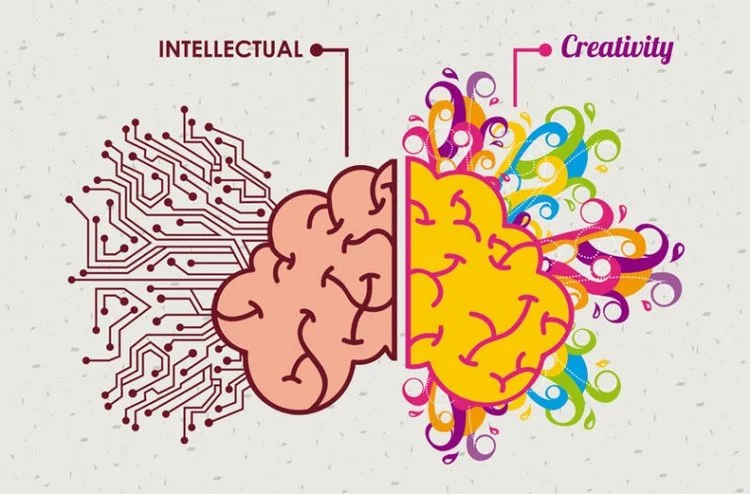
Why The Brain Thrives on What It Fears Most
Your perception of the world, life, yourself and others affects each and every decision you have ever made, or ever will make. Neuroscientist Beau Lotto has devoted much of his work to understanding perception, creativity, biases, and much more. He is the author of the book Deviate, which reveals startling truths about the brain and it’s perceptions. Beau argues that the next big innovation in the world is not a new technology, but rather a new way of seeing.
Everything we do in life we do to decrease uncertainty — Beau Lotto

Your perception of the world, life, yourself and others affects each and every decision you have ever made, or ever will make. Neuroscientist Beau Lotto has devoted much of his work to understanding perception, creativity, biases, and much more. He is the author of the book Deviate, which reveals startling truths about the brain and it’s perceptions. Beau argues that the next big innovation in the world is not a new technology, but rather a new way of seeing.
For A Deep Dive on Your Most Common Biases Check Out — http://www.successpodcast.com/weaponsofinfluence
Uncertainty of what your brain is receiving can lead to extreme consequences. Let’s take a simple example from Beau…
When you go down below in a boat and your eyes are moving and registering the boat, and your eyes are saying, “Oh, we’re standing still,” but your inner ears are saying, “No, no, we’re moving.” And your brain cannot deal with that conflict so it gets ill. — Beau Lotto
While getting a little seasick is not the end of the world the consequences of too much uncertainty can be tremendous. Too much uncertainty increases brain cell death. It decreases plasticity in the brain and transforms you into a more extreme version of yourself.
Think back to a time when you had to deal with extreme uncertainty. Was this a pleasant experience? Oftentimes when we are making extreme changes to our lives such as changing careers, moving to a new place, trying something potentially dangerous for the first time we see a drop in our health and mental state. This is because our brains are deeply wired to avoid this type of uncertainty at every turn.
Every minute of every day we are making hundreds of assumptions, which helps us mentally avoid uncertainty. As I type this I assume the chair I am sitting on will not give way and leave me sprawled out on the floor. I assume the desk in front of me was assembled correctly, I assume the keyboard on which I am typing will continue to work, and so on and so forth.
These assumptions are absolutely critical to our survival. Can you imagine what a nervous wreck we’d be if I stopped to make sure my chair was sturdy each minute. First of all I’d never finish writing this article but even worse I would most likely worry myself into no longer using this chair, checking the screws on my desk, and monitoring the battery life of my keyboard.
However, these assumptions can largely be a double edged sword themselves. Our brains are wired to take what is meaningless and assign it meaning. Look at the flip side, in the early development of human beings if I assumed that rustling sound was not a predator and it turned out to be a panther… it’s too late. I’m dead. Taking this information and all the inputs around you and assigning them meaning is the process of creating your own perceptions. The key is to be able to determine what can be assumed and what it worth checking out and worrying about.
Here’s the kicker.
If we do everything to avoid uncertainty, how will we ever see anything differently?
We do almost everything to avoid uncertainty. And yet the irony is that that’s the only place we can go if we’re ever going to see differently. — Beau Lotto
How would we ever be creative if we never dared to venture into the uncertainty of life? How would we learn to perceive the world differently through new information if all we did was avoid uncertainty our entire lives. Creativity begins with a question, a hypothesis, it begins with a “why?” or a “what if?” all which come through uncertainty.
This is also why it’s an interesting reaction when people become mad at one another for “flip-flopping” their opinions. Too often, especially in politics, individuals are criticized for changing their opinions to reflect new facts, new evidence, and new information. But how can we ever hope to grow and draw new conclusions if we ignore the uncertainty of new facts and opinions.
The irony of uncertainty is that while we were undoubtably hardwired to avoid it, it holds the key to our growth and to our success. As we noted, too much uncertainty for too long a period can have drastic consequences for your health but avoiding it altogether leaves one walking in place.
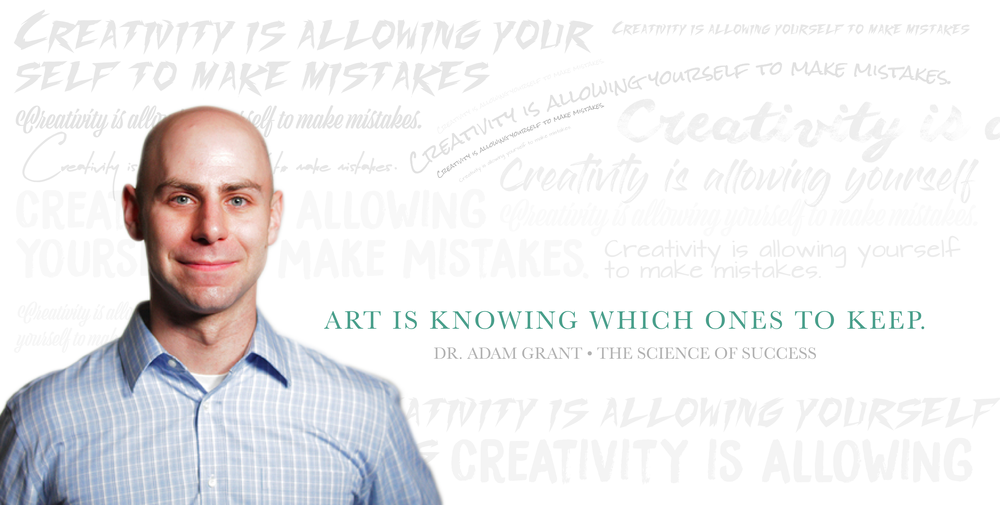
Adam Grant’s Guide To Success and Self-Awareness
As Wharton’s top-rated professor for the past six years running, Dr. Adam Grant knows a thing or two about what it takes to succeed. He’s one of the world’s 10 most influential management speakers, the best-selling author of Give & Take, Originals and Option B and a member of Fortune’s 40 under 40.

As Wharton’s top-rated professor for the past six years running, Dr. Adam Grant knows a thing or two about what it takes to succeed. He’s one of the world’s 10 most influential management speakers, the best-selling author of Give & Take, Originals and Option B and a member of Fortune’s 40 under 40.
In a recent interview, Adam shared with The Science of Success’s Matt Bodnarthe most impactful secrets to success, starting with self-awareness. In the world of self-awareness there’s a lot of talk about recognizing one’s own strengths and weaknesses. Dr. Grant argues, however, that it’s more beneficial and reliable to trust those around you to identify these weaknesses and not rely on your own (biased) soul searching.
Why Is It So Difficult To Be Self-Aware?
According to Dr. Grant, there are two main challenges when it comes to developing self-awareness. First, there are your own blind spots. These are shortcomings that the people around us can easily see, but that we might have a hard time identifying ourselves. As humans, we’re typically better at focusing on how we think we look, versus how others most likely see us. Our blind spots only become visible to us when we solicit outside feedback. When we understand how others view us in the world, it’s easier to change our behaviors and expectations.
Learn the top ten leadership blindspots and how to overcome them here.
We also must face our internal personal bias. Biases include the negative aspects of ourselves that we don’t want to see. For many, it can be easy to see ourselves in our own personal spotlight, as the hero of our own journey, which can lead to overconfidence.
“I think the big lesson here is that any time a trait is easy for other people to see or hard for us to admit, we can’t trust our own judgment of it,” — Adam Grant on The Science of Success
How We Overcome These Challenges
The good news is that these hurdles to becoming more self aware can be overcome. Dr. Grant’s solution is developing two networks of people; a support network and a challenge network.
Build a support network filled with people that you can count on to bring you up when you’re down. These should be the people you trust, those that will always give compliments and increase your confidence.
Your challenge network should be the people who will tell you that you’re not quite where you need to be. These are the people that will push you because they care about helping you get better.
“So if in the last six months somebody has given you really harsh feedback, you’ve probably done everything in your power to drop them from your life. In the short run, that might feel good, it might help with your motivation, but it destroys your opportunity to learn. I think we all need to embrace that challenge network if we want to reach our potential,” — Adam Grant on The Science of Success
When Asked, Be A Graceful Challenger
Many believe the “compliment sandwich,” is a good way to give feedback. This is when you offer criticism in between two compliments in order to lessen the blow. People mistakenly think this is the best way to offer negative feedback, but Grant argues this method only makes it harder for the receiver.
So if you find yourself a part of someone else’s challenge network follow this framework instead. Affirm a skill, value or achievement from one area then give your negative feedback in another. The idea is that you never want to give praise and criticism at the same time for the same project, piece of work or idea. This only serves to delude your feedback all together.
If you want to soften the blow of hard feedback praise something unrelated the receiver has done and start the conversation out in a positive light. Then change the subject to the project at hand and deliver your unbiased feedback. After all, you’re in someone’s challenge network because they trust you to push them. Give them what they expect.
Embrace The Devil’s Advocate
In every situation, business meeting, discussion, etc., make sure there is one person who genuinely disagrees with the majority opinion. It’s important that this person is not just playing a role, but truly has different ideas than the rest of the group. This person should be given the opportunity to argue passionately about their viewpoint thus stimulating divergent thinking. If done properly, the group will be more likely to reevaluate the situation on the table, gather new information, update their criteria and make a better decision in the end.
Make it known that no employee or partner has the right to withhold a critical opinion. Dr. Grant emphasizes the importance of creating a space and culture where dissenting ideas are encouraged. Everyone at the office should feel comfortable speaking up for his or her opinion no matter how different it is from the boss or from the group.
“Personality traits don’t predict behavior. Different ifs activate different thens.” — Adam Grant on The Science of Success
If you enjoyed this…
I study strategies for evidence based growth. Sign up below to get a TON of specific evidence based books, resources, and recommendations on being happy and successful.